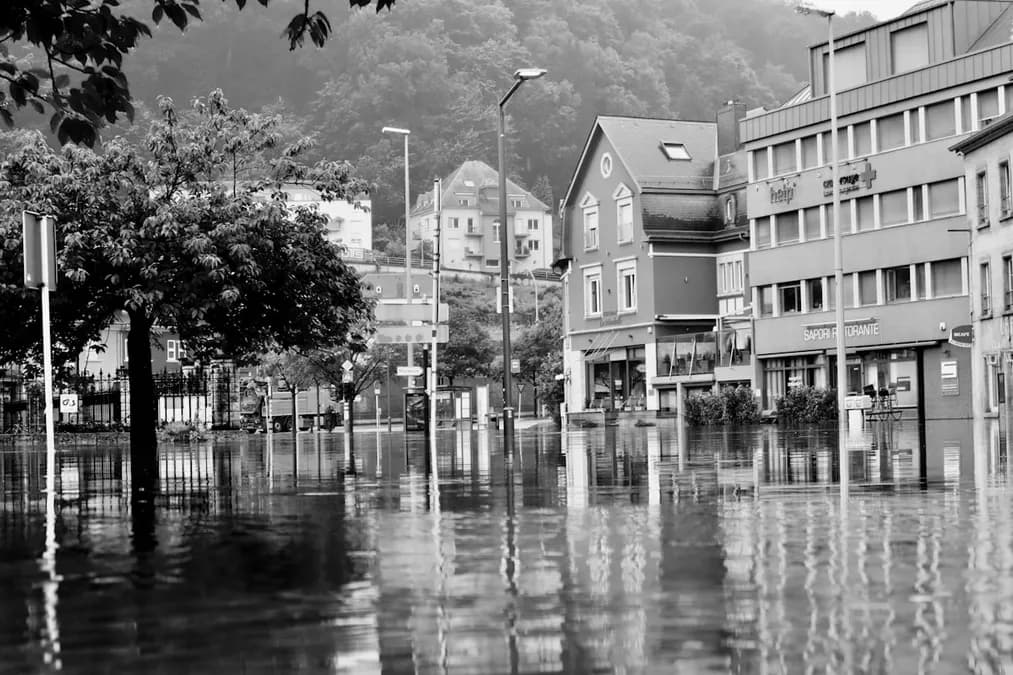
Why Are Floods in Chicago Worsening in 2026? Scientific and Climatic Analysis
A study from the University of Illinois warns about the worsening of intense rains in Chicago, exacerbated by climate change. These extreme precipitations are expected to intensify over the next 25 years, calling current infrastructures into question.
WE
Rédaction Weather IA
mercredi 6 mai 2026 à 05:22Updated mercredi 10 juin 2026 à 18:485 min
Chicago, a major metropolis in the American Midwest, is facing a growing climate challenge: worsening urban flooding. These phenomena, long perceived as rare, are multiplying and gaining intensity, threatening both the safety of residents and the resilience of infrastructures. A recent study from the University of Illinois highlights alarming projections for the coming decades.
Climate change plays a decisive role in this evolution. The increase in the average global temperature modifies hydrological cycles, leading to more frequent and intense rainfall episodes. In Chicago, this means that drainage and stormwater management systems, designed according to old standards, risk being insufficient.
Understanding the mechanisms behind this worsening is crucial to adapting public policies and infrastructures. The so-called "Bulletin 76" study, published in early 2025 by researchers from the University of Illinois, constitutes a major scientific alert on this subject. It highlights the need to rethink hydrological safety thresholds in light of new climatic realities.
The Facts
"Bulletin 76" warns that intense precipitation, already observed in Chicago, will significantly intensify within 25 years. According to this document, what is currently considered an exceptional rainfall event could become the norm tomorrow. This intensification is linked to global warming that favors an atmosphere more saturated with water vapor, a source of extreme rains.
Concretely, heavy rainfall episodes regularly exceed the capacity of existing infrastructures, causing major urban floods. These floods affect not only residential neighborhoods but also transportation networks, electrical systems, and commercial areas, generating significant economic and social costs.
Researchers also emphasize that regional climate models, supported by satellite data and machine learning neural networks, confirm this upward trend. These tools allow refining precipitation forecasts at the local scale, making projections more reliable for urban planning.
The Role of Climate Change in the Intensification of Rainfall in Chicago
Climate change, by increasing the average atmospheric temperature, increases the air's capacity to retain moisture. This phenomenon leads to more concentrated and intense precipitation during weather episodes. Chicago, located in a region where moist air masses from the Gulf of Mexico converge with frontal systems, is particularly vulnerable.
Researchers from the University of Illinois used predictive models integrating historical and current atmospheric data, coupled with machine learning, to simulate future scenarios. These models show a marked increase in rainfall episodes exceeding current safety thresholds, calling into question the relevance of existing standards.
This intensification of extreme precipitation is corroborated by recent observations and analyses from the European Copernicus service and international centers like ECMWF. These institutions use advanced technologies, notably deep neural networks, to refine forecasting and modeling of extreme climatological events.
Analysis and Stakes
The worsening of floods in Chicago raises major issues in urban management and climate resilience. Hydraulic infrastructures, designed according to outdated standards, are now insufficient to manage projected water volumes. This generates increased risks for public safety and disrupts the city's economic functioning.
Taking climate forecasts into account in urban planning becomes urgent. Data from predictive models and neural networks allow anticipating high-risk zones, thus facilitating the development of adaptation strategies. These strategies include renovating drainage systems, developing natural absorption areas, and implementing early warning systems.
Moreover, these phenomena illustrate the local consequences of global climate change, highlighting the need for concerted action at regional and global levels. Cooperation between scientists, policymakers, and the general public is essential to reduce vulnerability to extreme events.
Reactions and Perspectives
In response to these findings, local Chicago authorities have begun reevaluating their stormwater management policies. Infrastructure modernization projects, integrating the latest advances in climate modeling technology, are under study. The goal is to increase absorption capacity and reduce the impact of future floods.
Furthermore, the scientific community calls for increased vigilance and continued research using machine learning and satellite data to further refine forecasts. These tools offer considerable potential to anticipate risks and guide climate adaptation measures.
In Summary
Floods in Chicago are worsening due to climate change that intensifies extreme rainfall episodes. The University of Illinois's "Bulletin 76" study warns of continuous worsening over the next 25 years, a major challenge for urban infrastructures.
To cope, urgent adaptation of stormwater management systems is necessary, supported by advances in artificial intelligence and climate modeling. Chicago thus illustrates a emblematic case of the local challenges of global climate change.