Google's GraphCast: How This AI Model Surpasses ECMWF in 10-Day Weather Forecasting
Google DeepMind has designed GraphCast, an AI model that uses graph neural networks to predict weather up to 10 days ahead with accuracy superior to that of ECMWF. Discover how it works, its performance, and its impact on global forecasts.
WE
Rédaction Weather IA
mercredi 13 mai 2026 à 07:30Updated mercredi 10 juin 2026 à 21:146 min
Google DeepMind's GraphCast is revolutionizing weather forecasting by offering 10-day forecast accuracy superior to that of ECMWF, the global reference among meteorological centers. This AI model, based on graph neural networks, leverages complex atmospheric data to improve the reliability of global forecasts.
Unprecedented performance surpassing traditional models
GraphCast is capable of predicting weather up to 10 days ahead with accuracy that exceeds current standards, notably those of ECMWF (European Centre for Medium-Range Weather Forecasts). According to available information, this advancement is due to its ability to better model spatial and temporal interactions in the atmosphere. By exploiting satellite data and high-resolution atmospheric measurements, the model significantly improves forecast quality, thereby reducing forecast uncertainty over medium-range horizons.
Under the hood: the intelligence of graph neural networks to model the atmosphere
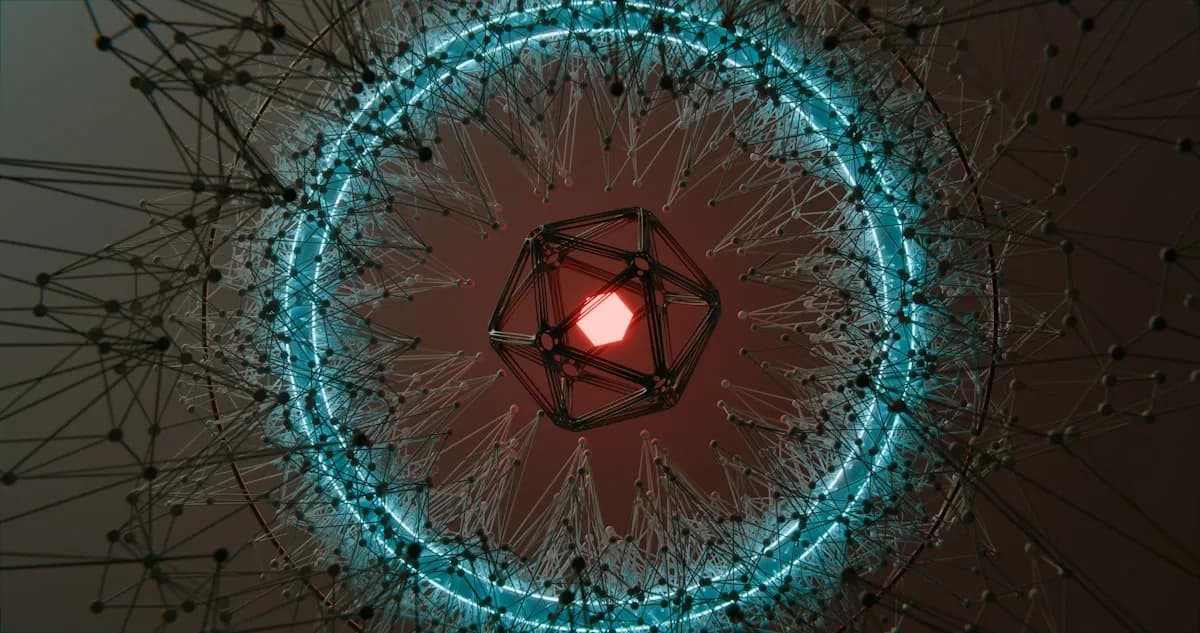
GraphCast relies on a graph neural network architecture, a type of neural network that represents data as graphs. In this context, each node represents a geographic point with its atmospheric variables (temperature, pressure, wind, humidity), while the edges translate the interactions between these points. This structure allows the model to capture complex physical dynamics and nonlinear relationships in the atmosphere, a major challenge for classical models based on physical equations. Machine learning enables training GraphCast on vast historical datasets, including observations from the Copernicus program and other satellite sources.
ECMWF vs GraphCast: a duel between physical models and AI
ECMWF uses numerical weather prediction models based on atmospheric physics equations, integrating real-time observational data. GraphCast, on the other hand, adopts a hybrid approach that combines the strengths of machine learning and big data. The result is an enhanced ability to predict complex phenomena such as cyclones or atmospheric fronts, often difficult to capture with classical models. This duel highlights the emergence of AI models as complements or even alternatives to traditional forecasting centers, with a notable reduction in forecast error over medium-range horizons.
What GraphCast changes for forecasters and global weather
The arrival of GraphCast could transform how global meteorological services produce their forecasts. Its computational speed and increased accuracy make it possible to consider integration into operational chains to refine weather alerts, especially for extreme phenomena. For meteorologists, it offers an additional tool to refine analyses by combining physical models and AI. On a societal level, more reliable 10-day forecasts can improve preparedness for climatic hazards and optimize the management of natural resources.
A major breakthrough at the heart of climate and technological challenges
In a context where climate change increases the frequency and intensity of extreme weather events, reducing forecast uncertainty becomes crucial. GraphCast illustrates how artificial intelligence applied to meteorology can meet this challenge by fully exploiting large-scale satellite and atmospheric data. This model paves the way for a new generation of forecasts that are more precise, faster, and better adapted to current planetary challenges, thus strengthening societies' resilience to climate risks.
The historical context of weather forecasting and the emergence of AI
Weather forecasting has long relied on complex physical models developed since the mid-20th century, with progressive improvements thanks to increased computing power and the availability of satellite data. ECMWF, created in the 1970s, has become an international pillar for medium-range forecasts thanks to its sophisticated numerical models. However, despite these advances, inherent limits of classical physical modeling, notably due to the nonlinearity of atmospheric phenomena, have long hindered the accuracy of longer-term forecasts. The emergence of artificial intelligence techniques, especially graph neural networks, marks a break by enabling the analysis of complex interactions among multiple atmospheric variables in a more flexible and innovative way, making a qualitative leap in forecast reliability possible.
Tactical challenges in the use of GraphCast by meteorological services
The adoption of GraphCast by meteorological agencies represents an important tactical challenge. Indeed, integrating an AI model like GraphCast into operational chains requires harmonization with existing physical models to ensure complementarity and robustness of forecasts. Services must adapt their IT infrastructures to leverage GraphCast's computational speed and continuous learning capability. Furthermore, the model's ability to precisely anticipate extreme phenomena allows for refined alert management and decision-making in crisis situations. This tactical integration must also meet users' transparency and trust requirements by explaining potential biases and systematically validating results against real observations.
Evolution prospects and global impact on climate management
GraphCast opens promising prospects for meteorology and global climate management. In the medium term, its integration could foster better anticipation of extreme weather events, reducing human and economic impacts. Scientifically, this model could be extended to incorporate additional variables related to climate change, such as atmospheric composition or ocean dynamics, thus strengthening the understanding of complex climate interactions. Moreover, improved forecasts will optimize the management of natural resources, such as water and energy, by adapting policies to anticipated weather conditions. Finally, this technological progress illustrates the possible synergy between artificial intelligence and environmental sciences, paving the way for innovations in other fields related to natural risks and sustainability.
In summary
Google DeepMind's GraphCast marks a major milestone in the evolution of weather forecasting by combining artificial intelligence and large-scale atmospheric data to surpass the performance of traditional models like ECMWF. With its increased 10-day accuracy, graph neural network-based architecture, and ability to model complex atmospheric interactions, this model opens new perspectives for meteorologists and society. By integrating GraphCast into operational chains, meteorological services will be better able to anticipate extreme phenomena and improve natural resource management in the face of climate change challenges, thereby strengthening overall resilience. This advancement illustrates the transformative potential of AI in meteorological science and adaptation to contemporary environmental challenges.