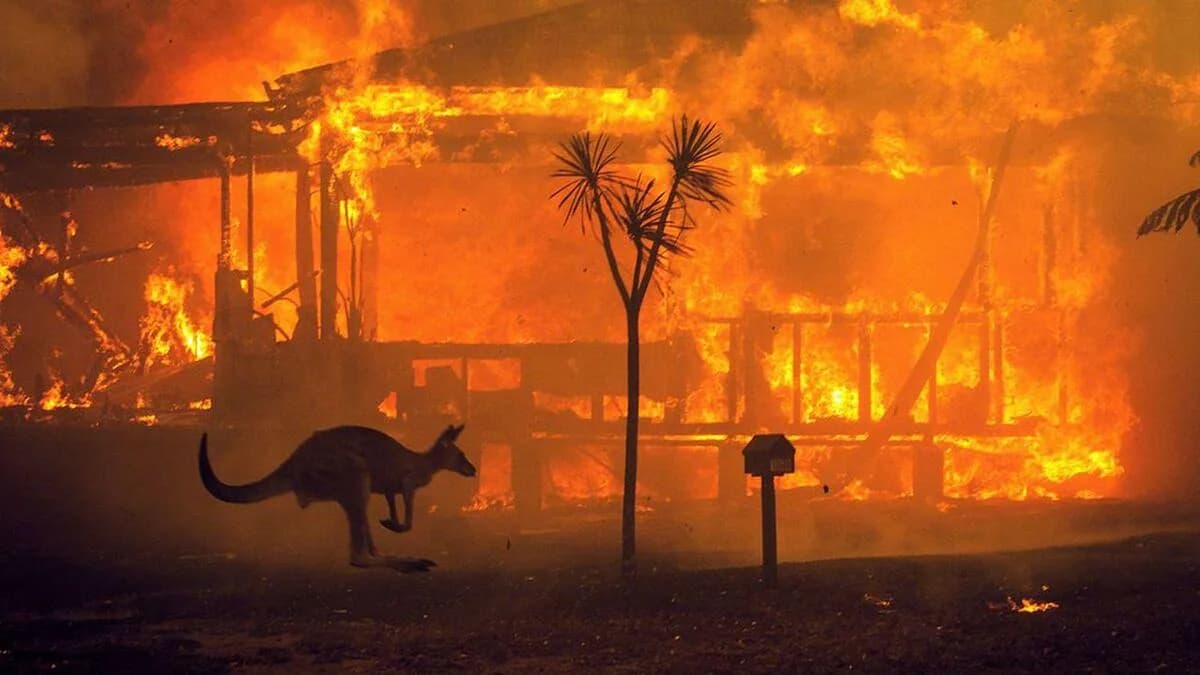
Europe experienced its worst fire season in 2025, with over a million hectares burned. Now, the risk is extending to cool climates, such as the Scottish Highlands and Irish plateaus, shattering conventional wisdom on the vulnerability of temperate regions.
WE
Rédaction Weather IA
samedi 23 mai 2026 à 09:47Updated mercredi 10 juin 2026 à 15:515 min
The summer of 2025 marked a dark turning point in European history: over a million hectares went up in flames, forcing tens of thousands of people to flee their homes. But the real shockwave of this destructive fire season lies not just in its magnitude, but in the geographical extension of the risk. Regions once considered safe, such as the Scottish Highlands and Irish plateaus, are now seeing their landscapes threatened by unprecedentedly intense forest fires. This new reality redefines our understanding of vulnerability to fires and the impact of climate change on diverse ecosystems.
Unsuspected Regions Suddenly Vulnerable
Images of burning forests often evoke Mediterranean landscapes or arid zones. However, recent data reveals an alarming trend: fires are gaining ground in cooler and more humid climates. The Scottish moors, Irish peat bogs, and boreal forests, once perceived as less prone to massive fires, are now on the front line. This spread is surprising in its speed and scope, challenging established risk management models.
Several elements converge to explain this increased vulnerability. Firstly, prolonged droughts, which are becoming more frequent even in temperate regions, dry out vegetation. Peat, omnipresent in the Highlands and on Irish plateaus, becomes a formidable fuel once dried. Secondly, episodes of intense heat, which are breaking records year after year, create conditions conducive to ignition. Finally, changes in agricultural and forestry practices, as well as the accumulation of organic matter in certain ecosystems, can contribute to creating significant fuel reservoirs.
The Shadow of Climate Change Looms Over Fresh Lands
Anthropogenic climate change is undoubtedly the main driver of this evolution. The increase in global average temperatures, even by a few degrees, has disproportionate consequences on ecosystems. In cool regions, this translates into drier summers, shorter and less intense frost periods, and an increase in the frequency of heatwaves. These conditions, once exceptional, are becoming the norm, making landscapes more flammable. Predictive models, integrating increasingly fine atmospheric data, confirm this trend: the probability of major fires in these areas will continue to increase if greenhouse gas emissions are not drastically reduced.
Faced with this growing threat, cutting-edge technologies play a crucial role. The use of artificial intelligence and machine learning allows for refining fire risk prediction. By analyzing enormous volumes of satellite, meteorological, and geographical data, neural networks can identify the most at-risk areas in near real-time. Models like those developed by institutions such as the ECMWF, or initiatives like Copernicus, use these approaches to map vegetation dryness, soil temperature, and meteorological conditions. This ability to predict risk evolution, even for rare events, is essential for a rapid and effective emergency response.
A Necessary Adaptation for Populations and Ecosystems
The spread of fires in cool climates requires a reevaluation of natural disaster prevention and management strategies. It's no longer just about preparing for summer heatwaves in the Mediterranean, but about integrating fire risk into the planning of all European regions. This involves new approaches to land use planning, forestry management to reduce fuel accumulation, and educating local populations on preventive measures. The uncertainty of forecasting remains a challenge, particularly for extreme and sudden events, but the continuous improvement of predictive models and the exploitation of atmospheric data open up promising perspectives for better anticipating and reacting to these increasingly present fires.
The 2025 season is not an isolated case, but a symptom of profound climate change that is reshaping the map of natural risks. The multiplication of extreme events, whether droughts, floods, or fires, underscores the urgency to act. Regions once spared by some of these phenomena must now prepare. The adaptation of infrastructure, agricultural and forestry practices, and public awareness have become absolute priorities for building resilience in the face of rapidly changing climate. Scientific discoveries and technological advances, particularly in the field of AI applied to weather, are indispensable tools in this fight.
Towards Increased Vigilance in Temperate Climates
The threat hanging over the Scottish Highlands and Irish plateaus is a warning signal for all of Europe. Forest fires are no longer the exclusive domain of hot and dry regions. The combination of extreme meteorological conditions and fuel accumulation, exacerbated by climate warming, creates a growing risk wherever vegetation is present. Vigilance must therefore extend, emergency plans be revised, and investments in prevention and surveillance, including through AI tools and satellite data, be strengthened. Europe's climate resilience will depend on our ability to anticipate and adapt to these new realities, even in the climates we thought were the safest.