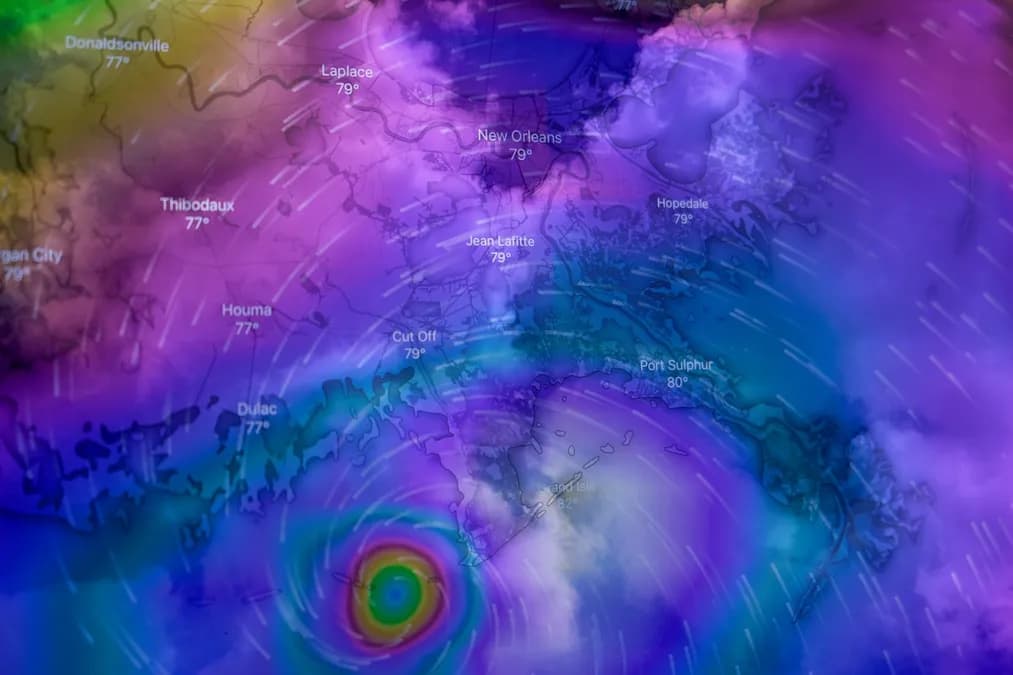
Supercharged El Niño: How This Extreme Phenomenon Threatens Global Climates
An exceptionally intense El Niño is developing, amplifying the risks of droughts and floods worldwide. This "supercharged" version of the climate phenomenon highlights the challenges related to climate change and weather forecasting.
WE
Rédaction Weather IA
lundi 18 mai 2026 à 14:02Updated mercredi 10 juin 2026 à 17:136 min
This year's El Niño phenomenon is shaping up to be one of the most powerful ever observed, with sea surface temperatures in the tropical Pacific far exceeding usual thresholds. This unprecedented intensification could trigger major global climate disruptions, affecting precipitation, temperatures, and extreme events.
A "supercharged" El Niño amplifies climate imbalances
According to Carbon Brief, what is called a "supercharged" El Niño is characterized by an ocean thermal anomaly far greater than classic episodes. Unlike traditional El Niños, which see warm water from the central and eastern Pacific rise to the surface, this amplified version generates more intense and widespread impacts. In 2026, experts observe sea surface temperatures exceeding the norm by several degrees, which is exceptional.
This phenomenon directly affects wind patterns and precipitation in many regions, causing severe droughts in some areas like Australia or Indonesia, while others, such as the west coast of South America, face torrential rains and flooding.
The mechanisms behind an amplified El Niño
El Niño results from complex interactions between the ocean and atmosphere in the tropical Pacific. Normally, trade winds push warm waters westward, near Asia, while cooler waters rise off the South American coasts. During an El Niño episode, these winds weaken, allowing warm water to spread eastward.
In the case of a "supercharged" El Niño, advanced neural networks and predictive models, such as those based on satellite data from Copernicus and ECMWF, indicate that the mechanism is exacerbated by global warming. The Pacific Ocean accumulates more heat, and the atmosphere responds with more abrupt changes in winds and precipitation. These models use machine learning to integrate millions of atmospheric and marine data points, thus detecting early warning signals of an intensified El Niño.
Concrete consequences on forecasts and risk management
The rise of a "supercharged" El Niño disrupts traditional seasonal forecasts. Meteorological agencies must now rely on next-generation predictive models capable of simulating these extremes with greater accuracy, such as GraphCast or Pangu-Weather. These models combine neural networks and satellite data to anticipate local impacts, whether heatwaves, prolonged droughts, or intense rainfall episodes.
This enhanced capability allows earlier warnings to authorities and populations, limiting human and economic losses. For example, in India, where record temperatures are already leading to the emergence of "heat lounges" to protect citizens, anticipating El Niño is crucial for managing infrastructure and public health. Farmers, meanwhile, can adjust their cropping practices based on seasonal forecasts.
Why this phenomenon is a climate alarm signal
The "supercharged" nature of this El Niño is a direct illustration of climate change's impact on atmospheric and oceanic phenomena. Oceans, by absorbing much of the excess heat, alter natural cycles, making some extreme events more frequent and severe. This finding is confirmed by satellite observations and ECMWF simulations, which show a trend toward amplification of sea surface temperature anomalies.
This situation heightens the urgency to fully integrate artificial intelligence into climate forecasting systems to better understand and anticipate these phenomena. The issue is also environmental: marine and terrestrial ecosystems face increased stress, threatening biodiversity and natural resources.
Historical context of El Niño phenomena and their global impacts
The El Niño phenomenon has been known for several centuries, with early observations dating back to Peruvian fishermen who noticed changes in fishing conditions linked to the rise of warm waters. Since then, climate science has improved understanding of these ocean-atmosphere cycles, which generally occur every 2 to 7 years. Historically, some El Niño episodes had dramatic consequences, such as in 1997-1998, when extreme floods and droughts affected multiple continents, causing significant human and economic losses.
Recent technological advances, notably in remote sensing and climate modeling, have improved anticipation of these events, but the intensification observed in 2026 highlights that El Niño phenomena are evolving in a context of global warming. This evolution changes their frequency, intensity, and the very nature of impacts, making risk management more complex and urgent.
Tactical challenges for resource and infrastructure management
Faced with a "supercharged" El Niño, governments and resource managers must quickly adapt their strategies. In agriculture, for example, precise forecasting of drought or heavy rainfall episodes is essential to optimize sowing, irrigation management, and harvesting. Infrastructure, especially in vulnerable urban areas, must also be strengthened to cope with increased risks of flooding or extreme heatwaves.
Implementing early warning systems and coordinating between various local and international agencies are crucial to minimize impacts. Moreover, the role of artificial intelligence technologies in tactical management is increasingly central, allowing integration of real-time data for faster and more tailored responses.
Impact on the global ranking of climate risks and future perspectives
The strengthening of El Niño phenomena contributes to the rise in ranking of extreme climate events in global climate risk indices. This trend puts increased pressure on national and international policies, which must incorporate these new parameters into their adaptation and mitigation plans. International cooperation is more necessary than ever to share data, technologies, and best practices in facing these global challenges.
In the long term, continued global warming could make these phenomena even more frequent and devastating. Scientific perspectives emphasize the need to reduce greenhouse gas emissions while strengthening the resilience of populations and ecosystems. Continuous monitoring and innovation in AI-based predictive models remain essential levers to better anticipate and manage these major climate risks.
In summary
In conclusion, this "supercharged" El Niño is a clear sign that ocean-atmosphere interactions are evolving under the effect of planetary warming. Advances in AI-based predictive models are essential to better manage these risks and protect populations. It is crucial to continue strengthening satellite observations and computing capabilities to refine these forecasts and adapt local and global adaptation strategies.