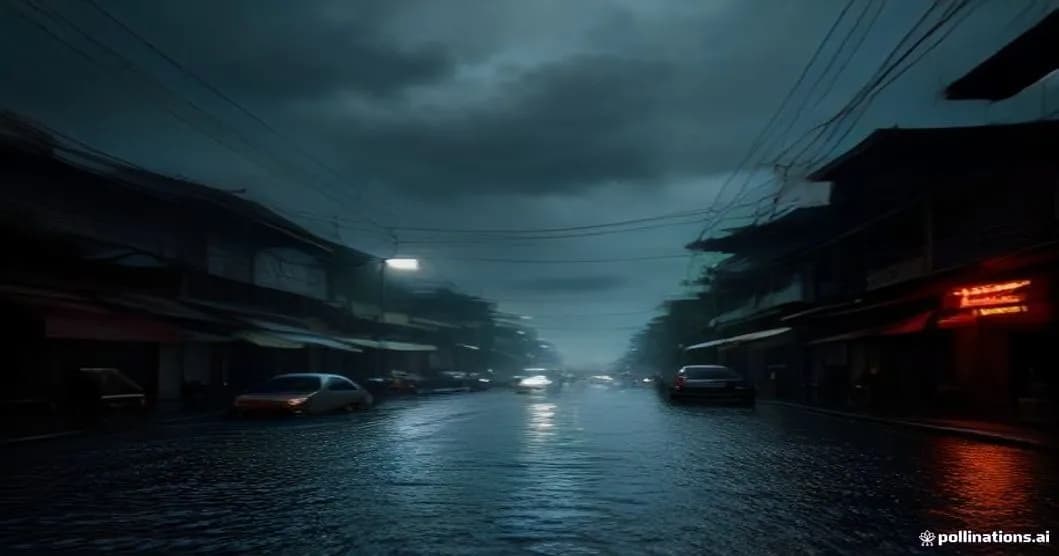
Bangkok faces deadly floods: how global warming amplifies tropical rains
In Bangkok, afternoon thunderstorms are increasingly turning into deadly floods. Climate change is boosting atmospheric moisture and the power of cumulonimbus clouds, overwhelming the city's drainage networks. Find out why rains are intensifying and what concrete steps residents can take.
Every afternoon, Bangkok's neighborhoods are deluged by sudden thunderstorms that flood roads and homes. Once sporadic, these torrential rains have become recurring threats, overwhelming urban drainage systems.
What's happening: intensified storms and floods in Bangkok
In Southeast Asia's humid zones, afternoon thunderstorms form almost daily. Heat causes cumulonimbus clouds to grow massive, releasing heavy rain on cities like Singapore, Hong Kong, and especially Bangkok. Bangkok's drainage networks were designed for brief but intense rainfall; today, the duration and intensity of these downpours often exceed their capacity, causing widespread flooding.
Data from Copernicus and ECMWF forecast models show a measurable increase in extreme rainfall events in the region. Precipitation maps show a growing concentration of heaviest rains over the Mekong basin, where Bangkok is located, exposing the city to wider and faster flood risks.
Why: Climate change fuels storm power
Global warming increases the atmosphere's ability to hold moisture - each degree Celsius allows air to hold about 7% more water, according to the Clausius-Clapeyron law. This extra moisture fuels convection systems, making cumulonimbus clouds taller and heavier with water. The result: more intense, concentrated downpours that exceed urban infrastructure thresholds.
Machine learning-based predictive models like GraphCast and Pangu-Weather use neural networks trained on satellite and ground data to anticipate these extreme events. Integrated into ECMWF forecasting systems, they suggest a 10-20% increase in the likelihood of events with more than 50mm rainfall in an hour over the next few decades, although exact figures remain 'unconfirmed information' for Bangkok.
Detailed scientific explanation of the phenomenon
The process begins with intense heating of the ground and surface air during the hours before midday. This heat creates atmospheric instability, causing warm air to rise rapidly. As it rises, the air cools, and water vapor condenses