Antarctica: Third Lowest Winter Sea Ice Extent, Implications?
The extent of Antarctic sea ice has reached its third lowest winter level in 48 years of satellite observations. This anomaly raises questions about underlying climate mechanisms and the ability of AI models to predict such events.
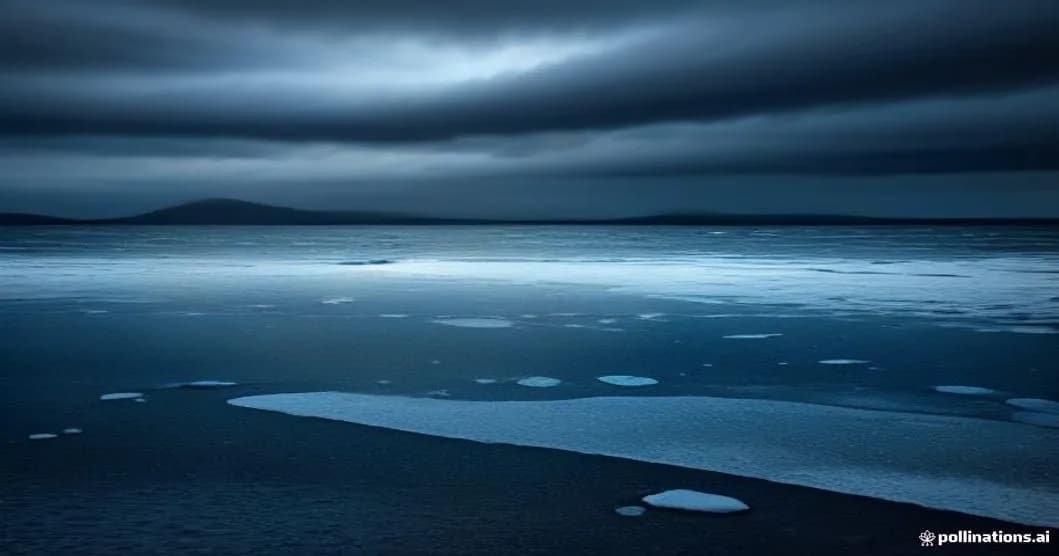
This season, the maximum extent of Antarctic sea ice has stabilized at a record low level, ranking as the third smallest winter peak ever recorded since satellite observations began 48 years ago. Such contraction, observed by Copernicus program sensors, exceeds usual interannual variations and is raising scientific concerns.
Record Low Winter Sea Ice in Antarctica
Satellite data from the entire Copernicus program, processed by surface detection algorithms, shows that the maximum extent of sea ice reached a historically low level, ranking after two previous winters that had already shown exceptionally low values. This measurement, taken at the end of the Antarctic winter, covers the entire Antarctic basin, from the coast of Marie Byrd Land to the open waters of the Antarctic Plateau.
Scientists from ECMWF, who integrate these observations into their global models, confirm that the downward trend is not merely a measurement artifact but a robust signal appearing in long-term simulations. ECMWF's predictive model, enriched with neural networks capable of rapidly assimilating new data, faithfully reproduces the decline in extent, reinforcing confidence in future forecasts.
Scientific Explanation of the Phenomenon
The reduction in sea ice results from a complex combination of physical processes. Firstly, ocean surface warming, measured by Argo buoys and infrared sensors, increases seasonal melt. Warmer seawater transfers more thermal energy to the upper layer of ice, accelerating its thinning and retreat.
Next, circumpolar currents, notably the Antarctic Circumpolar Current, redistribute warm water masses around the continent. When these currents penetrate into ice formation zones, they disrupt local energy balance and favor earlier melt.
A third often underestimated factor is albedo change. Sea ice has a high albedo, reflecting much of the solar radiation. As ice cover decreases, dark ocean absorbs more solar energy, creating a positive feedback effect: more heat is retained, leading to more melt.
AI models like GraphCast and Pangu-Weather, trained on historical data, struggle to predict such extreme events due to the complex interplay of these factors.