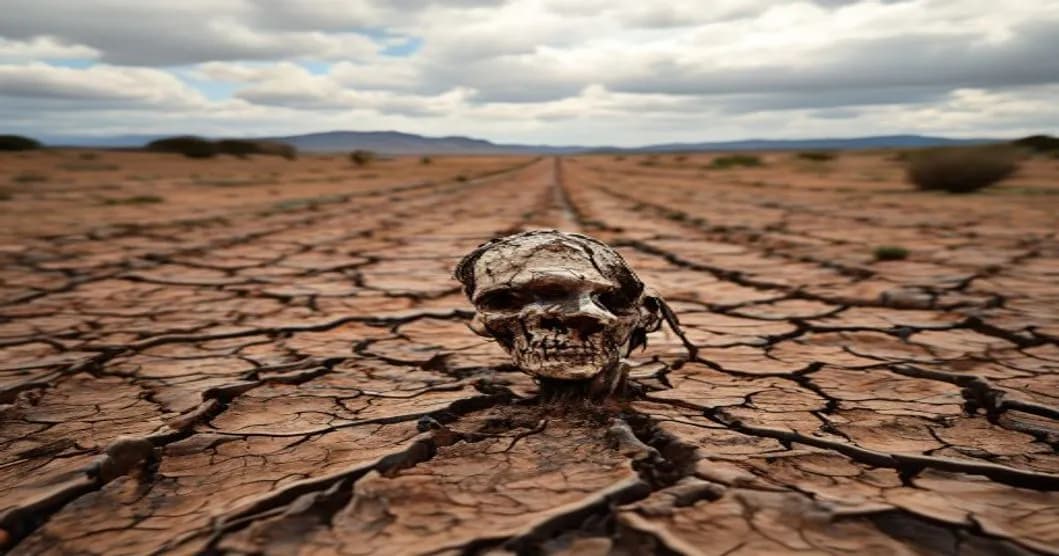
Texas: The Water Crisis Faces the Appetites of Data Centers
In Corpus Christi, the desperate search for drinking water intensifies, forcing the city to take extreme measures. But an unexpected obstacle arises: projects for large water-consuming data centers could compromise the region's water future. This tension reveals the climate and industrial challenges of the AI era.
WE
Rédaction Weather IA
mercredi 20 mai 2026 à 12:38Updated mercredi 10 juin 2026 à 22:086 min
In southern Texas, a coastal city is struggling to secure its water supply. Corpus Christi, constantly threatened by drought, is in a race against time to find new sources. The city has even begun laying pipes to the small town of Sinton, with a population of 5,500, before obtaining the necessary drilling permits. This urgency highlights growing tensions, as unexplained delays in obtaining these permits could be linked to data center projects. These digital infrastructure facilities, which often have underestimated water needs, require large amounts of water for cooling.
Corpus Christi: A Growing Thirst, Unexpected Obstacles
The situation in Corpus Christi is symptomatic of a major environmental and socio-economic challenge. Facing increasingly frequent and severe drought episodes, the city is desperately seeking to diversify its water sources. Sinton's groundwater represents a crucial lifeboat. However, according to Inside Climate News, Corpus Christi leaders suspect that the delays in obtaining drilling permits are not merely administrative hiccups. They fear that plans for large-scale data centers, which would require enormous amounts of water for cooling, could be behind these hold-ups.
These infrastructures, pillars of our digital economy and the rise of artificial intelligence, are power-hungry and water-greedy. A medium-sized data center can consume millions of gallons of water per day, equivalent to tens of thousands of households. This consumption is primarily due to cooling systems essential for maintaining servers at optimal temperatures, preventing overheating and equipment failure. The dilemma is clear: how to reconcile technological development, essential for economic growth, with the preservation of a vital resource already under pressure?
The Colossal Water Footprint of Data Centers
The explosion of artificial intelligence, machine learning, and cloud services has led to an unprecedented proliferation of data centers worldwide. These facilities are the digital brain of our civilization, housing the neural networks that power everything from weather forecasts to voice assistants. However, this computing power comes at an environmental cost. Beyond their electricity consumption, often sourced from fossil fuels, their water needs are a growing concern for climate and resource experts.
The most common cooling systems for data centers use water evaporation to dissipate heat. This process is effective but results in significant water loss into the atmosphere. In regions already affected by water scarcity, such as Texas, the arrival of these technological giants raises fundamental questions about resource management. The predictive models for water consumption in these facilities are complex, depending on server load, ambient temperature, and cooling system efficiency. Without rigorous and transparent planning, the impact on local communities and ecosystems could be devastating.
Climate as a Backdrop: A Resource Under Constant Pressure
The situation in Corpus Christi is not isolated. Globally, climate change is exacerbating tensions over water. Atmospheric data collected by institutions like the ECMWF (European Centre for Medium-Range Weather Forecasts) and the European Union's Copernicus program show an increase in the frequency and intensity of droughts in many regions. These observations, combined with climate predictive models, confirm a decrease in the availability of freshwater in areas already arid or semi-arid.
The uncertainty in predicting future precipitation patterns makes planning even more challenging. Aquifers, which recharge slowly, are overexploited, and water quality is deteriorating. In this context, each new water demand, especially from water-intensive industries like data centers, must be evaluated with extreme caution. Texas, with its scorching summers and prolonged drought episodes, serves as a real-world laboratory for these interdependent challenges.
AI: Ally or accomplice in the water crisis?
While artificial intelligence consumes water through its infrastructure, it also offers powerful tools for better managing this vital resource. Machine learning can revolutionize how we monitor, predict, and manage water. Neural networks can analyze satellite data to map water resources, detect leaks in distribution networks, and optimize agricultural irrigation. AI-based models can predict urban and industrial water demand with unprecedented accuracy, enabling more efficient allocation and reducing waste.
Just as models like GraphCast or Pangu-Weather are transforming weather forecasting by processing massive amounts of atmospheric data to anticipate extreme events, AI can develop sophisticated predictive models for hydrology. These tools can help anticipate droughts, manage reservoirs, and advise decision-makers on the best adaptation strategies to climate change. However, it is crucial that AI development and deployment be done responsibly, fully integrating an assessment of its environmental impact, including its water consumption.
Anticipating and Managing the Future of Our Water Resources
The situation in Corpus Christi highlights a complex reality: economic and technological growth, essential to our society, can no longer ignore their environmental impacts. Managing water, especially in a changing climate, requires an integrated approach and informed decisions. AI-powered predictive models can provide valuable information, but they must serve a sustainable development strategy that prioritizes community needs and ecosystem health.
It is imperative that industrial projects, particularly those related to data centers, undergo rigorous and transparent environmental evaluations. Local communities should be involved in decision-making processes, and regulators must ensure that vital resources are not monopolized at the expense of the public good. The future of water in Texas—and beyond—depends on our collective ability to balance innovation, growth, and ecological responsibility.