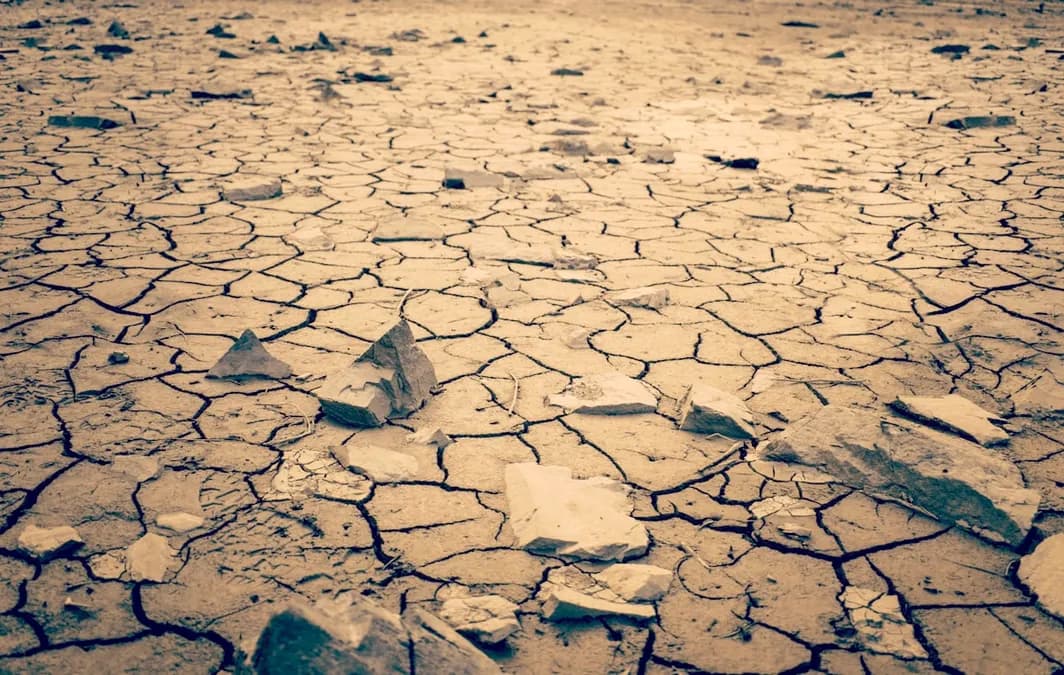
NASA's AI uses satellite data to monitor agricultural droughts, allowing for anticipation of water needs and more efficient management of water resources. The applications for agriculture and water management are considerable.
WE
Rédaction Weather IA
dimanche 24 mai 2026 à 18:19Updated mercredi 10 juin 2026 à 15:417 min
Agricultural Droughts: NASA's AI for Monitoring and Anticipating Water Shortage
Agricultural Droughts: NASA's AI for Monitoring and Anticipating Water Shortage
Agricultural droughts are an increasingly frequent phenomenon and can have devastating consequences on agricultural yields and ecosystems. To address this challenge, NASA has developed a geographic information system called SERVIR, which uses satellite data to monitor droughts on a global scale.
How Researchers Use Satellite Data
Researchers use Landsat and MODIS satellite images to assess the state of vegetation and detect signs of drought. This data is then analyzed using predictive models to anticipate water needs and identify the most vulnerable areas.
NASA's AI uses a neural network to analyze satellite data and predict droughts. This model takes into account numerous factors, such as precipitation, temperature, soil moisture, and vegetation, to assess the risk of drought.
Compared to Classic Physical Models: The Match
Classic physical models of drought forecasting are often limited by their ability to account for the complexities of the climate system. NASA's AI offers a more nuanced approach, taking into account numerous factors and using satellite data to refine forecasts.
Agricultural droughts are often linked to climate factors such as temperature variation, precipitation, and wind. The global increase in temperature, due to climate change, can also contribute to drought by reducing soil water availability and increasing plant transpiration.
Additionally, human activities such as deforestation, overexploitation of water resources, and air pollution can also contribute to drought by disrupting ecosystems and reducing water quality.
Agricultural droughts are caused by a combination of climate and environmental factors. One of the main factors is the decrease in precipitation, which can be due to changes in atmospheric circulation patterns or natural climate fluctuations. The increase in temperature can also contribute to drought by increasing evaporation from soils and plants.
Soils can also play a crucial role in drought. Soils with low water-holding capacity or a porous structure can be more sensitive to drought, as they cannot retain enough water for plants. Furthermore, soils that have been degraded by erosion or pollution can also be more vulnerable to drought.
Regional Impacts and Practical Advice
The impacts of drought can vary significantly depending on the region and agricultural activity. Here are some examples of regional impacts and practical advice for farmers:
Asia-Pacific: Drought has a significant impact on peanut and rice crops. Farmers can take measures to mitigate the impact of drought by using water conservation techniques, such as drip irrigation. They can also use drought-resistant crop varieties and adopt sustainable agricultural practices to reduce soil erosion and maintain fertility.
Africa: Drought can have a significant impact on maize and sorghum crops. Farmers can take measures to mitigate the impact of drought by using precision agriculture techniques, such as water management and selection of drought-resistant varieties. They can also use efficient irrigation systems and adopt soil management practices to reduce erosion and maintain fertility.
Americas: Drought can have a significant impact on maize and soybean crops. Farmers can take measures to mitigate the impact of drought by using water conservation techniques, such as drip irrigation. They can also use drought-resistant crop varieties and adopt sustainable agricultural practices to reduce soil erosion and maintain fertility.
Europe: Drought can have a significant impact on wheat and rapeseed crops. Farmers can take measures to mitigate the impact of drought by using precision agriculture techniques, such as water management and selection of drought-resistant varieties. They can also use efficient irrigation systems and adopt soil management practices to reduce erosion and maintain fertility.
It is essential to note that the impacts of drought can vary significantly depending on the region and agricultural activity. Farmers must therefore adapt their drought management strategies to their specific needs and local conditions.
Comparison with Similar Past Weather Events
The current drought is comparable to similar past weather events, such as the 1983 Sahel drought and the 2006 Australian drought. These events have shown the importance of drought monitoring and forecasting in mitigating its impacts.
The 1983 Sahel drought was one of the most severe in the region's history, with precipitation below 50% of the average. This drought had devastating impacts on crops and livestock, contributing to famine and poverty in the region.
The 2006 Australian drought was one of the longest and most severe in the country's history, with precipitation below 50% of the average for over 10 years. This drought had significant impacts on crops and livestock, contributing to reduced agricultural production and job losses in the region.
In summary, NASA's AI offers an innovative approach to monitoring and predicting agricultural droughts. By using satellite data and predictive models, researchers can identify the most vulnerable areas and anticipate water needs. This can have a significant impact on water resource management and ecosystem protection.
It is essential that farmers, policymakers, and local communities work together to mitigate the impacts of drought and protect water resources. By using the tools and data provided by NASA, they can make informed decisions to address drought and ensure food security and environmental sustainability.
Drought is a global challenge that requires a collective and coordinated response. NASA's AI is a powerful tool in the fight against drought and the promotion of environmental sustainability.
Conclusion
Agricultural droughts are a complex phenomenon that requires a multidisciplinary approach to be managed effectively. NASA's AI offers an innovative approach to monitoring and predicting agricultural droughts, and can have a significant impact on water resource management and ecosystem protection.
It is essential that farmers, policymakers, and local communities work together to mitigate the impacts of drought and protect water resources. By using the tools and data provided by NASA, they can make informed decisions to address drought and ensure food security and environmental sustainability.