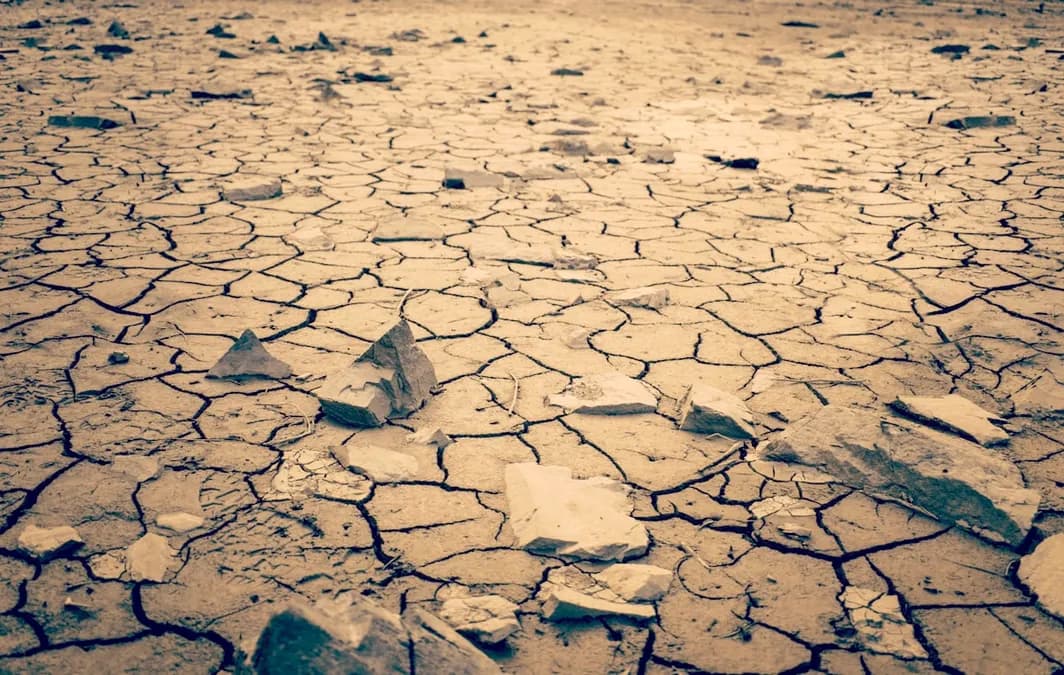
Extreme Drought in the United States: Over 60% of the Country Affected, a Rare Phenomenon in Its Intensity and Extent
More than 60% of the United States is experiencing drought, with 20% in extreme drought, according to a climatologist. This phenomenon, among the worst in decades, combines intensity and geographic extent, strongly impacting agriculture and water resources.
WE
Rédaction Weather IA
vendredi 15 mai 2026 à 06:02Updated mercredi 10 juin 2026 à 17:496 min
More than 60% of the American territory is facing drought conditions, with over 20% of this area in extreme drought. This alarming observation was made by Andrew Ellis, a climatologist at Virginia Tech, who emphasizes that this combination of intensity and geographic extent is rare in several decades.
An unprecedented picture of American drought
According to data consolidated by American climate monitoring agencies and reported by Phys.org, half of the country is currently affected by a marked water deficit. More precisely, 60% of the national area is in drought, while more than 20% are experiencing extreme drought, synonymous with very severe conditions for soils, vegetation, and water resources.
The most affected regions stretch from the arid Southwest, traditionally vulnerable, to areas of the Midwest and even some parts of the East Coast, where drought is more unusual. This phenomenon directly affects agricultural activities, drinking water supply, and increases the risk of wildfires.
The mechanisms behind this intense drought
Drought results from a complex combination of prolonged meteorological anomalies and climatic factors. According to Andrew Ellis, what makes this episode exceptional is the simultaneous convergence of several parameters: a sustained precipitation deficit, high temperatures increasing evaporation, and limited cloud cover that favors intense solar radiation.
These conditions create a vicious circle where the soil dries out quickly, reducing moisture available in the atmosphere and limiting chances of precipitation. Satellite data and ground observations confirm the persistence of this dry regime for several months.
Climate change amplifies the drought
While droughts are natural phenomena, the role of climate change is now recognized in their intensification. The increase in average temperatures, changes in precipitation patterns, and increased evapotranspiration worsen water deficits.
Andrew Ellis points out that "the combination of the intensity and geographic coverage of this drought is rare, and climate change plays a key role in this evolution." This trend is consistent with climate model projections, which predict an increase in the frequency and severity of droughts in several regions worldwide.
Concrete impacts and prospects for relief
The agricultural sector is particularly vulnerable, with probable crop losses in the most affected areas. Water restrictions are multiplying in several states, affecting both urban and rural populations.
Regarding prospects, Andrew Ellis indicates that "a return to more normal conditions will depend on weather developments in the coming weeks." However, predictive models show few signs of rapid improvement, which could prolong this critical situation.
This drought highlights the need to improve forecasting tools, notably through the integration of satellite data and advanced climate models, to better anticipate these extreme episodes.
A historical context marked by recurrent droughts
The United States periodically experiences drought episodes, but the current situation stands out for its exceptional intensity and extent. Historically, the American Southwest has regularly faced severe droughts, notably in the 1930s with the Dust Bowl that caused significant agricultural and economic crises. However, recent droughts, especially those in the 2010s, have already shown a trend toward worsening climatic conditions. This new dry period seems to be part of a continuity but with even more widespread and prolonged impacts, now affecting regions previously less vulnerable such as the Midwest and the East Coast. This evolution highlights the importance of rethinking water management strategies at the national level.
Major socio-economic and environmental challenges
Beyond agricultural losses, the current drought poses considerable challenges for managing drinking water resources, especially in urban areas where demand remains high. Water restrictions and calls for conservation are multiplying, affecting the daily lives of millions of Americans. Furthermore, drought increases the vulnerability of natural ecosystems, reducing biodiversity and raising the risk of wildfires, which have already caused devastation in several states in recent years. It also generates economic tensions, with increased costs related to irrigation, public health, and natural disaster management. These challenges reinforce the need for interstate coordination and adaptation of public policies to the realities of a changing climate.
Medium-term prospects and adaptation strategies
Faced with this water crisis, authorities and scientists focus on developing sustainable solutions to mitigate impacts and better prepare for the future. Strengthening water storage and distribution infrastructure, improving agricultural practices to save water, as well as promoting wastewater reuse are central to the strategies considered. Moreover, research in climate modeling and satellite remote sensing allows for refining forecasts and anticipating drought episodes with greater precision. Andrew Ellis emphasizes that "a fine understanding of climatic mechanisms and collaboration between scientists, decision-makers, and managers are essential to limit the consequences of these extreme phenomena." Finally, raising public awareness about the importance of water conservation is a key element to face this collective challenge.
In summary
More than 60% of the United States is currently experiencing a drought of intensity and extent rarely observed in several decades, with over 20% of the territory in extreme drought. This phenomenon results from an unprecedented combination of precipitation deficit, high temperatures, and intense solar radiation, exacerbated by climate change. The impacts are multiple: weakened agriculture, increased water restrictions, higher wildfire risks, and economic tensions. While short-term prospects remain uncertain, adaptation efforts and improved forecasting tools appear essential to better manage these episodes and protect vital resources. This observation underscores the urgency of coordinated action in the face of challenges posed by a changing climate.
Source: Phys.org, based on analyses by Andrew Ellis, climatologist at Virginia Tech.