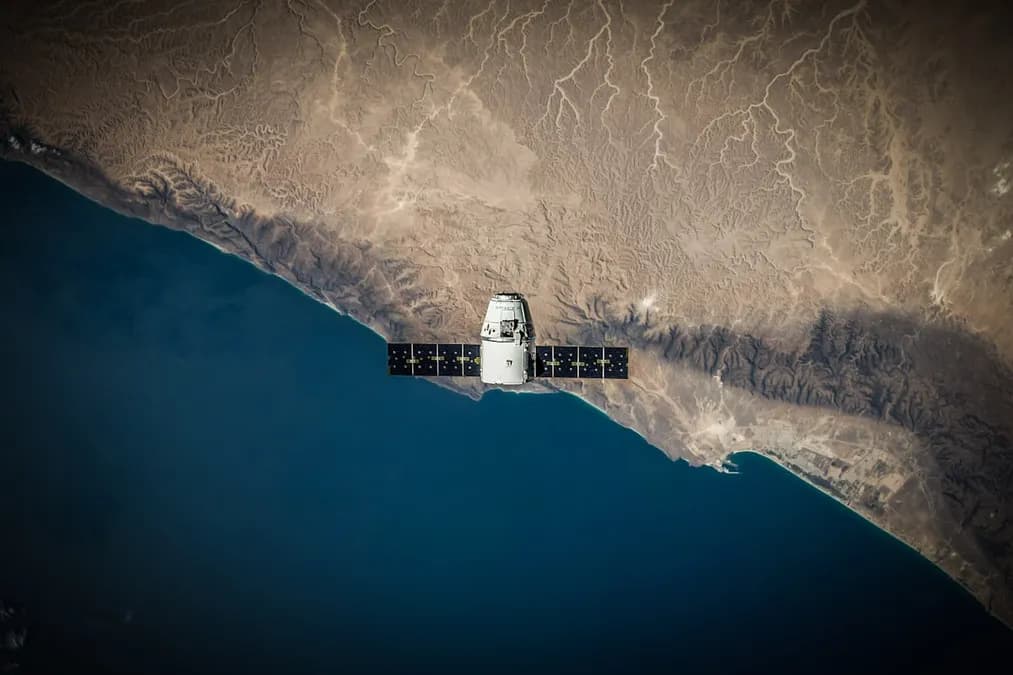
Loss of the Maven Probe: Impact on Martian Research
NASA has lost contact with the Maven probe after ten years of studying the Martian atmosphere. This loss impacts research on the planet's climate and habitability. The data collected by Maven has profoundly renewed our knowledge of Mars.
WE
Rédaction Weather IA
vendredi 5 juin 2026 à 04:50Updated mercredi 10 juin 2026 à 20:086 min
The Loss of the Maven Probe: Consequences for Martian Research
NASA has officially ended the Maven mission, a probe that orbited the planet Mars for more than ten years. This probe played a crucial role in understanding the Martian atmosphere, past climate, and potential habitability of the planet.
Impact of the Loss of the Maven Probe on Martian Research
The loss of contact with the Maven probe after six months of absence of communication has significant implications for the scientific community. The data collected by Maven allowed for a better understanding of atmospheric processes on Mars, including how the atmosphere has evolved over time.
The information gathered by Maven has also enlightened scientists on the climatic conditions that may have prevailed on Mars in the past, which is essential to understand if the planet could have supported life at some point. The probe contributed to answering fundamental questions about Mars' habitability, by studying the interactions between the atmosphere and the soil.
Maven's Contribution to Understanding the Martian Atmosphere
During its orbit around Mars, Maven provided detailed data on the structure and composition of the Martian atmosphere. These data have helped scientists to understand how the Martian atmosphere has changed over millions of years, particularly in terms of gas loss and modification of atmospheric pressure.
These changes are due to the loss of gas from the Martian atmosphere, which occurs due to the planet's low gravity. In fact, gravity is essential to maintaining the atmosphere in place, and when gravity is too low, gases escape into space. This is exactly what happened on Mars, where gas loss led to a reduction in atmospheric pressure.
The loss of gas from the Martian atmosphere is also influenced by the interactions between the sun and the Martian atmosphere. Charged particles emitted by the sun, such as electrons and protons, can interact with gas molecules in the Martian atmosphere, leading to the loss of these gases into space. This interaction is known as solar atmospheric erosion.
The results of the research conducted thanks to Maven have implications for the planning of future missions to Mars, whether robotic or manned. A deep understanding of the Martian environment is crucial to ensure the safety and success of these missions.
Implications for Future Mars Missions
The loss of the Maven probe highlights the importance of continuing to explore and study the planet Mars. The lessons learned thanks to Maven and the data it collected will be precious for the next steps in Mars exploration, particularly in the development of new technologies and strategies to face the challenges posed by the Martian environment.
As the scientific community continues to analyze the data from Maven, new missions are planned to deepen our understanding of Mars. These efforts will contribute to advancing our knowledge of the Red Planet and bring us closer to the ultimate goal: understanding if life has or could have existed on Mars.
Regional Impacts and Practical Advice
The loss of the Maven probe has regional implications, particularly in terms of planning future missions to Mars. Space agencies and universities must take into account the lessons learned thanks to Maven to develop new strategies and technologies to face the challenges posed by the Martian environment.
Practical advice: Space agencies and universities should focus on developing technologies to maintain the atmosphere in place on Mars, such as gas confinement systems. This will require close collaboration between scientists, engineers, and industry professionals to develop effective solutions.
The regions that could be affected by the loss of the Maven probe include the Martian polar regions, where ice and snow are present. The loss of gas from the Martian atmosphere could lead to an increase in temperature and modification of climatic conditions in these regions, which could have implications for the planning of future missions to Mars.
Space agencies and universities must also take into account the implications of the loss of the Maven probe for the planning of manned missions to Mars. Understanding the Martian environment is crucial to ensure the safety and success of these missions, and the lessons learned thanks to Maven will be precious for developing strategies and technologies to protect astronauts from the dangers of the Martian environment.
Comparison with Similar Past Weather Episodes
The loss of the Maven probe can be compared to the 'Great Red' weather episode that occurred on Mars in 2007. This storm was caused by the reduction in atmospheric pressure due to the loss of gas from the Martian atmosphere. Scientists used the data collected by Maven to better understand this phenomenon and develop strategies to face the challenges posed by the Martian environment.
The comparison between the loss of the Maven probe and the 'Great Red' weather episode highlights the importance of continuing to explore and study the planet Mars. The lessons learned thanks to Maven and the data it collected will be precious for the next steps in Mars exploration, particularly in the development of new technologies and strategies to face the challenges posed by the Martian environment.
Conclusion: The loss of the Maven probe has significant implications for Martian research and the planning of future missions to Mars. The lessons learned thanks to Maven and the data it collected will be precious for the next steps in Mars exploration, particularly in the development of new technologies and strategies to face the challenges posed by the Martian environment.
The loss of the Maven probe reminds us of the importance of research and space exploration. The discoveries and lessons learned thanks to Maven and other space missions will be essential to advancing our knowledge of the universe and developing new technologies and strategies to face the challenges posed by the space environment.
Finally, the loss of the Maven probe invites us to reflect on the importance of international cooperation in research and space exploration. Space missions are often the result of collaborations between space agencies, universities, and industries from different countries, and the loss of the Maven probe highlights the importance of continuing to work together to advance our knowledge of the universe and develop new technologies and strategies to face the challenges posed by the space environment.