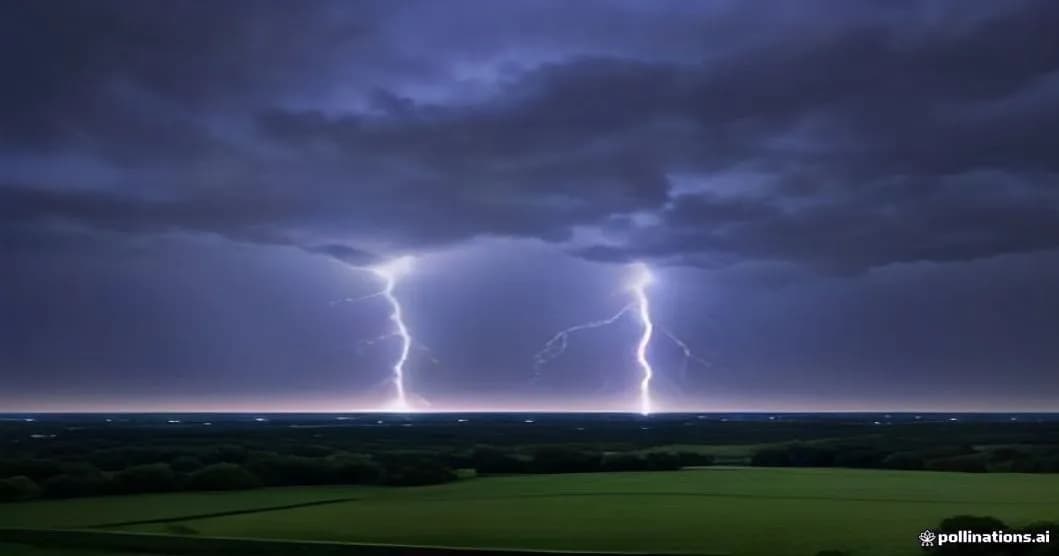
France is often affected by intense thunderstorms, particularly in the southeastern part of the country. These phenomena can cause significant damage and disrupt daily activities. But what do we actually know about these thunderstorms and how do they form?
Factors Contributing to Thunderstorm Formation in France
Thunderstorm formation depends on several factors, such as temperature, humidity, and atmospheric convection. In France, thunderstorms often form when a mass of warm, humid air rises into the upper atmosphere and encounters cooler air. Information not confirmed at this stage
From an atmospheric physics perspective, a thunderstorm results from the vertical instability of the airflow. When warm, less dense air rises rapidly, it cools, condenses, and releases latent heat that fuels further ascent. This dynamic creates powerful updrafts, lightning, and heavy precipitation. Information not confirmed at this stage
Regional Impacts of Thunderstorms
The consequences of a thunderstorm vary depending on the region. In mountainous areas, heavy rains can trigger flash floods, while in plains, strong winds can uproot trees and damage roofs. Coastal regions may be exposed to enhanced marine gusts. Additionally, densely populated urban areas may experience rapid flooding due to impermeable soil, complicating rescue operations. Information not confirmed at this stage
Thunderstorms can cause localized flooding, power outages, traffic disruptions, and flight delays or cancellations. Emergency services are often mobilized to secure risk areas and assist affected populations. Telecommunication networks may also be interrupted, making alert dissemination more difficult. Information not confirmed at this stage
Practical Tips for Preparing for Thunderstorms
In the face of thunderstorm threats, several good practices are recommended: checking local weather forecasts, avoiding flood-prone areas, securing loose objects, and staying indoors in solid buildings. In case of lightning, avoid isolated trees and metal installations. It is also advisable to unplug sensitive electronic devices and prepare an emergency kit containing a flashlight.