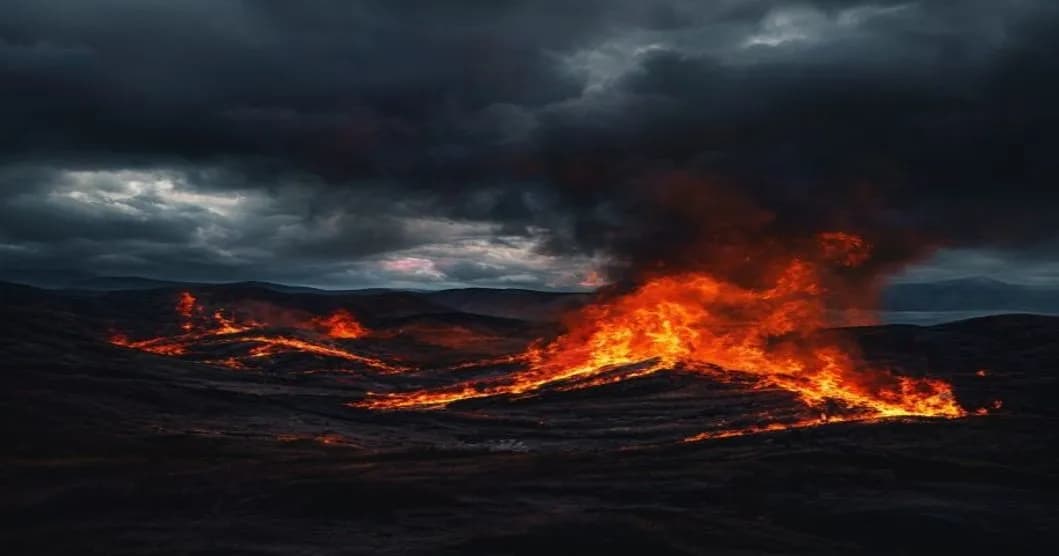
Forest Fires in Spain: Over 29,000 Hectares Burned
A devastating forest fire in Guadalajara province, Spain, has burned over 29,000 hectares of land. Authorities estimate this fire to be one of the most complex in the country's history. The situation is particularly concerning with a new heatwave beginning.
WE
Rédaction Weather IA
mardi 21 juillet 2026 à 10:43Updated mardi 4 août 2026 à 05:425 min
Over 29,000 hectares of land were burned in a devastating forest fire in Guadalajara province, Spain. According to available information, this fire is considered one of the most complex in the country's history, requiring the mobilization of over 600 wildland firefighters during the night from Monday to Tuesday.
Forest Fire in Spain: Scale and Response
The rapidly spreading fire necessitated a massive response from emergency services. Firefighters worked tirelessly to try to contain the flames, but the task proved particularly difficult due to the nature of the terrain and unfavorable meteorological conditions.
Spanish authorities have declared the situation to be extremely concerning, especially with the arrival of a new heatwave that risks exacerbating the situation. Forest fires are a major concern during periods of drought and extreme heat, as they can spread rapidly and are difficult to control.
Causes and Contributing Factors
Forest fires are often the result of a combination of factors, including meteorological conditions, terrain topography, and human activities. Drought and extreme heat can transform landscapes into powder kegs ready to ignite at the slightest spark. Strong winds and high temperatures can then quickly spread the fires.
Climate change also plays a significant role in the increasing frequency and severity of forest fires. Rising temperatures and changes in precipitation patterns can create conditions more favorable to fires. It is therefore crucial to understand these factors and develop strategies for effectively preventing and managing forest fires.
Scientific Explanation
Forest fires are often linked to the presence of moisture in vegetation. When temperatures rise, the moisture evaporates, which can lead to an increase in friction between particles of vegetable matter. This friction can generate heat and sparks, which can then spread the fires.
Forest fires can also be fueled by the presence of combustible material, such as branches, leaves, and other dry vegetable matter. When these materials are exposed to heat and ventilation, they can burn quickly and intensely.
Regional Impacts
Forest fires like the one unfolding in Spain have significant impacts on the environment, public health, and local communities. They can destroy entire ecosystems, affect air quality, and endanger lives.