AI and Satellites: Tomorrow's Weather is Being Shaped in Space
Next-generation weather satellites, like Meteosat Third Generation, and CubeSat constellations are pouring astronomical amounts of data. Artificial intelligence is now essential to transform this deluge of information into accurate weather forecasts, especially at the local level.
WE
Rédaction Weather IA
samedi 23 mai 2026 à 09:51Updated mercredi 10 juin 2026 à 15:506 min
Every day, terabytes of satellite data flood meteorological research centers. This information, captured by increasingly sophisticated instruments aboard satellites like Meteosat Third Generation (MTG) or CubeSat constellations, is the raw material for weather forecasts. But without massive and intelligent processing capabilities, this data would remain an untapped goldmine. This is where artificial intelligence comes in, revolutionizing our ability to understand and anticipate the weather.
From Satellite Images to Hyperlocal Forecasts
Next-generation weather satellites no longer just capture images in the visible spectrum. They carry sensors capable of probing the atmosphere across a multitude of wavelengths, providing detailed information on temperature, humidity, chemical composition, and cloud dynamics. The MTG satellite, for example, with its new generation of instruments, offers unprecedented spatial and temporal resolution. CubeSat constellations, smaller and less expensive, allow for denser coverage and more frequent observation of specific areas. These data streams, of unprecedented complexity and volume, would be unmanageable by traditional analysis methods.
Artificial intelligence, particularly machine learning techniques and deep neural networks, has become indispensable for processing this satellite data. These algorithms are capable of identifying complex patterns, detecting subtle anomalies, and correlating information from different sources and instruments. For example, a neural network can be trained to recognize the characteristic signatures of different types of clouds or dangerous weather phenomena from images and spectral data. AI thus enables a transition from simple observation to near real-time predictive interpretation. It can identify nascent storm formations, estimate the trajectory and intensity of a depression, or assess the risk of hail or heavy rain much faster than before. The exploitation of data from Copernicus, the European Earth observation program, greatly benefits from these advancements.
Local Forecasts Finally Meeting the Stakes
One of the major benefits of AI applied to satellite data is the dramatic improvement in local-scale forecasts. Traditional weather models, based on atmospheric physics, are often limited in their ability to predict very localized and short-lived events, such as thunderstorms or coastal fog. By integrating and analyzing fine-grained data from satellites in real time, AI models can refine these forecasts. For example, by combining high-resolution images from MTG with data from other sensors, an AI model can anticipate the formation and movement of a storm over a specific city with unprecedented accuracy. This capability is crucial for risk management, agriculture, transportation, and even the daily lives of citizens.
It would be reductive to see AI as a replacement for classic physical weather models, such as those developed by ECMWF (European Centre for Medium-Range Weather Forecasts). On the contrary, the trend is towards synergy. Physical models provide a solid foundation, rooted in the laws of physics, while AI offers data-driven learning capabilities that correct biases, improve spatial and temporal resolution, and better represent complex, non-linear phenomena. Models like Google DeepMind's GraphCast or Huawei's Pangu-Weather already show impressive performance, rivaling or even surpassing the best traditional models on certain tasks, particularly for short- and medium-term forecasts. AI excels at identifying correlations in vast historical datasets, enabling formidable efficiency in anticipating atmospheric evolution. This combination of physics and machine learning paves the way for unprecedented forecast reliability.
The Evolution of Constellations: A Global Network of Observers
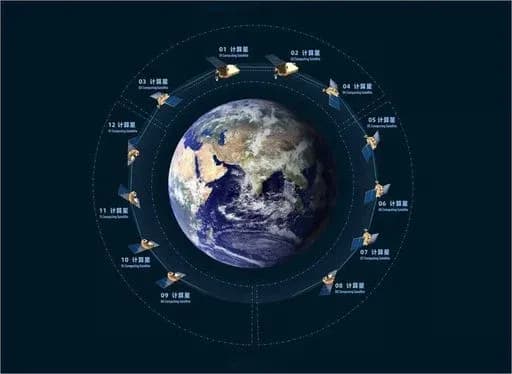
Beyond geostationary satellites like MTG, the rise of small satellite constellations, often called CubeSats, marks another revolution in data collection. These satellites, deployed in large numbers in low Earth orbits, offer unprecedented flexibility and coverage. Their reduced production and launch costs allow for the consideration of dense constellations capable of observing the Earth from different angles and at very high frequencies. AI is essential for aggregating and interpreting the mass of data from these multiple heterogeneous sources, transforming a network of individual observers into a coherent global observation system. These constellations enable quasi-continuous monitoring of specific regions, crucial for tracking rapidly evolving weather phenomena.
AI's ability to identify complex patterns in vast volumes of data is particularly valuable for the early detection of extreme weather events. From hurricanes to tornadoes, flash floods, and heatwaves, anticipating these events is vital. AI algorithms can be trained to recognize the subtle atmospheric signatures that precede the intensification of these phenomena, often long before they are detectable by conventional analysis methods. By analyzing satellite data in real time, AI models can alert meteorological services earlier and with greater accuracy, thus providing crucial response time for the protection of populations and infrastructure.
Towards More Resilient Meteorology Thanks to AI
The deep integration of AI into the weather forecasting chain, from satellite data capture to alert dissemination, promises to enhance the resilience of our societies to climate hazards. By improving the accuracy and speed of forecasts, especially for extreme and local events, AI helps decision-makers to better plan and deploy necessary resources. This synergy between space, cutting-edge sensors, and the analytical capabilities of artificial intelligence opens the way to a better understanding and management of weather risks, a major challenge in the context of climate change. The goal is to transform the inherent uncertainty of weather into actionable information, enabling more effective adaptation.
In Summary
Artificial intelligence is radically transforming the field of meteorology. By leveraging the power of new satellites like MTG and CubeSat constellations, AI enables the processing of unprecedented data volumes to generate more accurate forecasts, particularly at the local level and for extreme events. This approach, which combines the strengths of traditional physical models and machine learning, promises more reliable meteorology and better resilience to climate challenges.