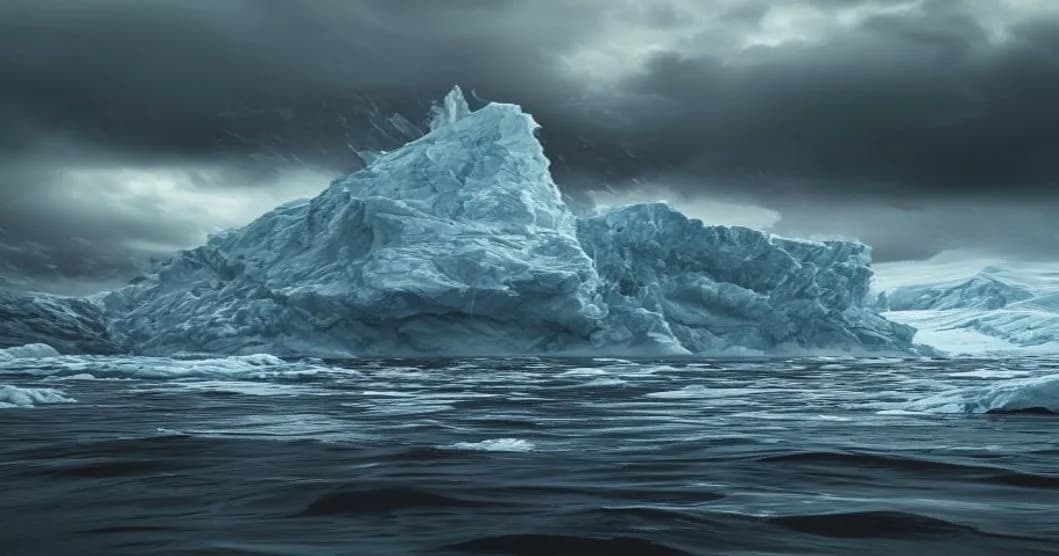
The Disappearance of Ice in Antarctica: An Alarming PhenomenonThe Disappearance of Ice in Antarctica
The Disappearance of Ice in Antarctica: An Alarming Phenomenon
The end of winter in the Northern Hemisphere traditionally marks the beginning of the coldest period in Antarctica, where temperatures drop and surrounding oceans freeze, nearly doubling the size of the continent. However, in recent years, scientists have observed a significant decline in the sea ice surrounding Antarctica, a phenomenon that intrigues and concerns the scientific community.
The Phenomenon of Missing Ice
Researchers have found that the area of sea ice in Antarctica has decreased significantly in recent years. This decline is particularly pronounced during the Australian winter months, when the ice should normally expand and cover a large part of the Southern Ocean. Satellite data and ground observations have highlighted this trend, which appears to be accelerating.
Studies conducted by international teams, including with the support of the ECMWF and Copernicus, have used predictive models and atmospheric data to analyze the possible causes of this ice disappearance. The results suggest that climate change, particularly the increase in air and water temperatures, plays a major role in this phenomenon.
Scientific Causes
Scientists explain that the melting of ice in Antarctica is primarily due to the increase in air and sea water temperature. The greenhouse effect, caused by greenhouse gas emissions, traps heat and leads to an increase in average temperatures. This temperature increase has a direct impact on sea ice, which begins to melt as temperatures exceed critical thresholds.
Additionally, ocean currents and winds also play an important role in the distribution and formation of sea ice. Changes in these currents and winds, influenced by climate change, can also contribute to the reduction of sea ice.
Scientific Explanation of the Phenomenon
The melting of ice in Antarctica is primarily due to a combination of several factors. First, the greenhouse effect is a key factor, as it traps heat and leads to an increase in average temperatures. Second, the increase in sea water temperature, which is on average 3.2 degrees Celsius higher than air temperature, contributes to the melting of ice. Finally, changes in ocean currents and winds, influenced by climate change, can also contribute to the reduction of sea ice.
The disappearance of ice in Antarctica has significant implications for the environment and global climate. Sea ice plays a crucial role in regulating the climate by reflecting sunlight and helping to maintain ocean temperatures. The loss of this ice can accelerate climate warming, having cascading effects on marine and terrestrial ecosystems.
The consequences of this phenomenon are multiple and varied, ranging from changes in marine habitats to an increase in sea levels. Coastal communities and vulnerable ecosystems are particularly exposed to the risks associated with rising waters and more frequent storms.
Scientists recommend taking measures to reduce greenhouse gas emissions and protect marine and terrestrial ecosystems. Individuals can also do their part by reducing their energy consumption, using eco-friendly transportation, and respecting the environment.
Comparison with Similar Weather Episodes in the Past
The disappearance of ice in Antarctica is a unique phenomenon, but it is comparable to other similar weather episodes in the past. For example, the melting of the Ellesmere Island ice cap in Canada, which began about 10,000 years ago, led to a rise in sea levels of several meters. Similarly, the melting of the George Land ice cap in Antarctica, which began about 20,000 years ago, led to a rise in sea levels of several centimeters.
It is essential to note that the disappearance of ice in Antarctica is an ongoing phenomenon, and it is challenging to predict its impact on marine and terrestrial ecosystems with precision. However, scientists agree that the loss of ice in Antarctica is an alarming phenomenon that requires immediate attention.
Conclusion
The disappearance of ice in Antarctica is an alarming phenomenon that requires immediate attention. Scientists agree that the loss of ice in Antarctica is a unique phenomenon, but comparable to other similar weather episodes in the past. The consequences of this phenomenon are multiple and varied, ranging from changes in marine habitats to an increase in sea levels. Individuals can do their part by reducing their energy consumption, using eco-friendly transportation, and respecting the environment.
In conclusion, the disappearance of ice in Antarctica is a phenomenon that requires immediate attention and collective action to protect the environment and global climate.