Tropical cyclones: why warming favors lower storms and complicates risks
A recent study reveals that climate change tends to produce tropical cyclones that are less vertically deep. This phenomenon calls into question current storm risk assessments.
WE
Rédaction Weather IA
vendredi 15 mai 2026 à 19:51Updated mercredi 10 juin 2026 à 21:355 min
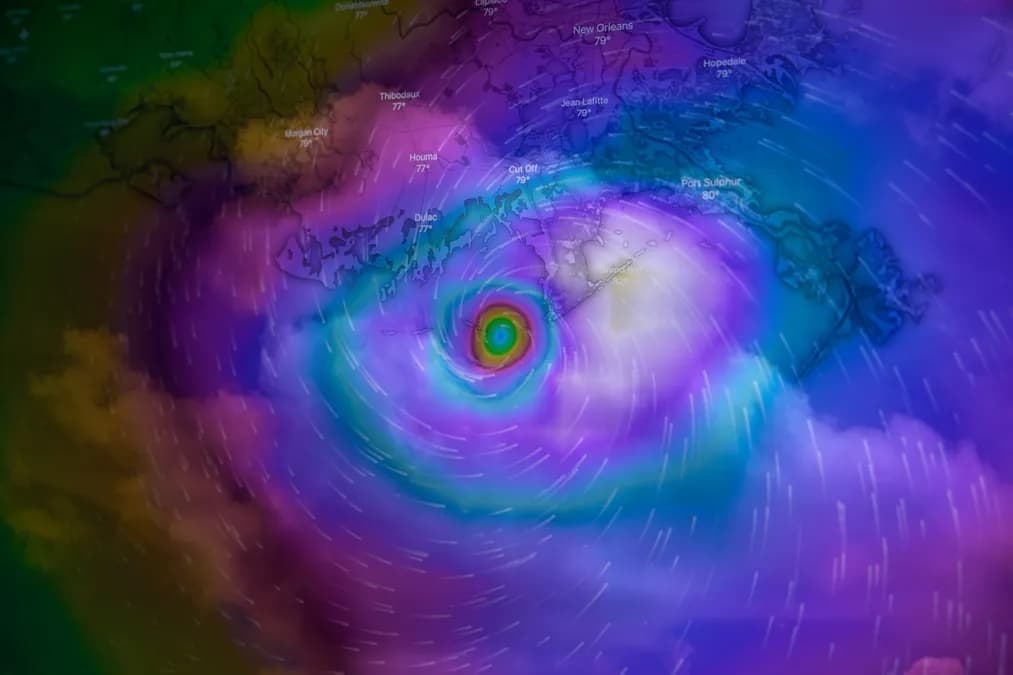
Tropical cyclones, among the most destructive weather phenomena, are changing their vertical profile due to global warming. A new study published by international researchers highlights that these systems are becoming flatter, meaning with a vertically lower structure than before. This evolution raises crucial questions about the reliability of current risk assessments based on older cyclone characteristics.
Less vertical cyclones, an unexpected discovery
Scientists used advanced climate models combined with satellite data to analyze the vertical structure of tropical cyclones under warming conditions. They found that although cyclone intensity and their precipitation have been widely studied, the modification of their vertical height had so far been little explored. Their results indicate a marked trend towards more superficial cyclones, with a notable decrease in the maximum altitude of clouds and strong winds.
According to this study reported by Phys.org, this structural difference is particularly important because it directly influences ground impacts, notably in terms of precipitation distribution and wind.
How warming modifies cyclone structure
The main mechanism behind this phenomenon is linked to changes in the composition and temperature of the atmosphere. With a warmer climate, the layer of moist and unstable air where cyclones form extends less in altitude. This modification reduces cyclones' ability to develop very tall cloud columns, resulting in a flatter structure.
In simple terms, warming changes the vertical thermal profile, limiting the intense convection that usually feeds powerful and very tall cyclones. The result is a storm that concentrates its energy closer to the surface.
What consequences for cyclone risk management?
This new understanding calls into question forecasting and risk assessment models based on more vertical cyclones. Authorities and meteorological services could underestimate certain dangers, notably those related to sudden flooding and the distribution of strong winds.
A more superficial cyclone can generate very concentrated rains over a limited area, increasing the risk of localized flooding. Moreover, the modification of the vertical structure could affect the trajectory and perceived intensity of cyclones by satellites and radars, introducing increased uncertainty in forecasts.
Potential impacts on populations and infrastructure
The flatter structure of cyclones means that the distribution of violent winds and extreme precipitation could become more irregular and localized. This complicates population preparedness, as affected areas could be smaller but subjected to severe intensities, notably in terms of flash floods and concentrated wind gusts. Infrastructure, especially electrical networks and drainage systems, could suffer more unpredictable damage, making adaptation of building standards and emergency plans necessary.
Furthermore, coastal areas could face increased challenges due to sea level rise combined with these less vertical cyclones. The lower height of cloud columns does not necessarily reduce the threat related to storm surges and marine inundations, which remain critical factors for population safety.
Challenges for meteorological modeling and forecasting
Current cyclone forecasting models largely rely on traditional parameters based on storm height and vertical structure. The emergence of flatter cyclones requires revising algorithms and better integrating fine atmospheric data to capture these structural changes. This involves strengthened collaboration between climatologists, meteorologists, and numerical modeling specialists.
Moreover, satellites and radars must adapt their observation methods to accurately detect these lower structures, which is essential for delivering reliable early warnings. Without these adjustments, forecasters risk underestimating the threat or misanticipating cyclone evolution, which can compromise crisis management and population protection.
Why this discovery is crucial in the face of climate change
While the frequency and intensity of tropical cyclones are closely monitored in the context of global warming, the transformation of their vertical structure opens a new research field. Better understanding this dynamic is essential to adapt predictive models and improve the resilience of exposed populations.
By integrating these new data, meteorological centers such as ECMWF and Copernicus programs could refine their models to reduce forecast uncertainty. This would also allow better anticipation of local impacts, essential for emergency planning and damage reduction.
In summary, this study highlights a little-known but fundamental aspect of tropical cyclones in a changing climate, emphasizing the urgency to revisit risk assessment tools to better protect vulnerable areas.
In summary
The discovery that global warming favors tropical cyclones with flatter vertical structures challenges current paradigms of forecasting and risk management related to these extreme phenomena. This evolution impacts not only the scientific understanding of cyclones but also authorities' ability to anticipate and respond effectively to threats. It is therefore essential that research continues to explore these transformations to adapt climate models and protection strategies. Only an integrated and updated approach will better protect vulnerable populations and infrastructures against storms that are changing their face under the effect of climate change.