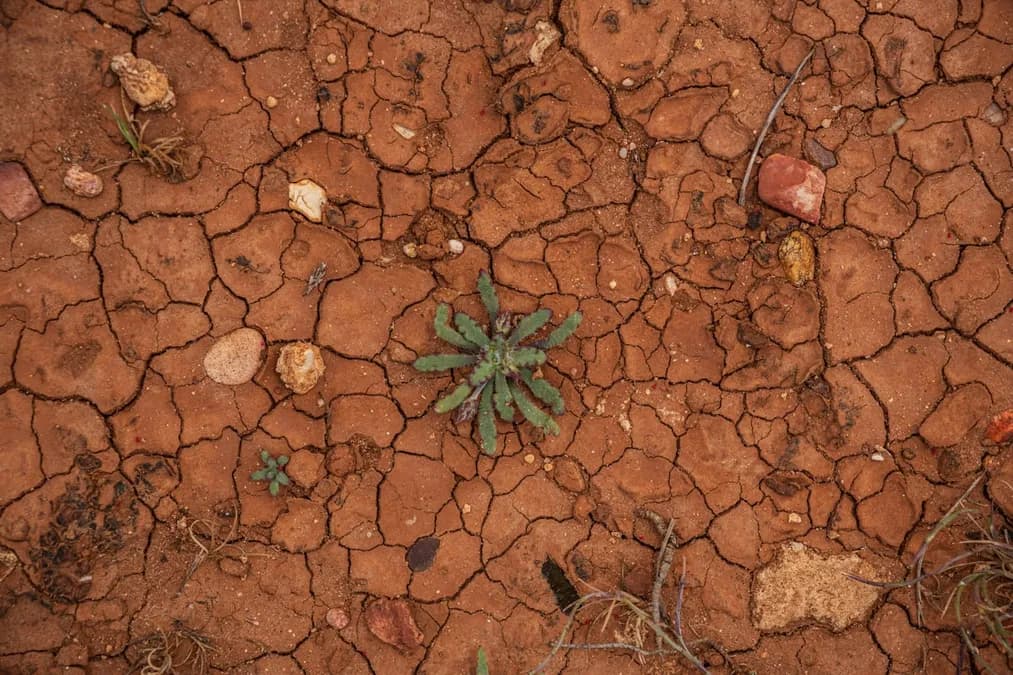
How Extreme Climate Shocks Increase the Risk of Armed Conflicts in Vulnerable Areas
A study reveals that certain extreme climate events, notably critical droughts, significantly increase the likelihood of wars, especially in Africa and Southeast Asia. This link highlights major challenges for global stability in the face of climate change.
WE
Rédaction Weather IA
mardi 12 mai 2026 à 05:20Updated mercredi 10 juin 2026 à 20:586 min
Since 1950, extreme climate events have played an unsuspected role in the emergence of armed conflicts, according to a recent study published in the journal Proceedings of the National Academy of Sciences. By analyzing detailed data on climate and conflicts over more than sixty years, researchers have established that critical drought thresholds in particularly vulnerable regions, such as parts of Africa and Southeast Asia, significantly increase the probability of wars.
A strengthened correlation between extreme droughts and armed conflicts
This research is based on a meticulous cross-analysis of climate data and historical armed conflict records from 1950 to 2023. The authors show that when droughts exceed critical thresholds, they generate exacerbated socio-economic tensions that can escalate into violence. Vulnerable regions, often marked by low economic resilience and fragile institutions, are the most exposed.
This new scientific work reinforces an already substantial body of research linking extreme climate events and political instability. Inside Climate News highlights that these results are particularly relevant for areas such as the Sahel or certain provinces in Southeast Asia, where pressure on natural resources is already intense.
How drought can trigger conflicts
The mechanism is essentially related to the drastic reduction of vital resources, notably water and food. A prolonged drought decreases agricultural production and water availability, fueling competition among local groups, communities, and sometimes even states. This increased pressure can weaken social and political structures, creating fertile ground for the emergence of armed conflicts.
Researchers use predictive models fed by satellite data and historical climate records to quantify the impact of these phenomena. Machine learning allows distinguishing drought thresholds beyond which the risk of war notably increases, taking into account socio-economic and political factors.
Implications for conflict prevention and management
This study crucially sheds light on conflict prevention strategies in a world facing climate change. International agencies like Copernicus and climate institutions such as ECMWF can integrate these indicators into their early warning systems to anticipate potential climate-related crises.
Beyond meteorology, this multidisciplinary approach calls for strengthening the resilience of vulnerable populations through policies integrating sustainable resource management, economic support, and political stability. These levers are essential to mitigate the impact of extreme climate events on peace and security.
A major challenge in a changing climate context
As climate change amplifies the frequency and intensity of extreme events, understanding their role in conflict dynamics becomes imperative. This research published in a prestigious journal underscores the urgency of integrating the climate dimension into geopolitical analyses and global security policies.
According to available data, these links between drought and war are not uniform: they strongly depend on the local socio-political context, which complicates forecasts. Yet, recognizing these interactions opens the way to more sophisticated decision-support tools capable of reducing the risks of violence related to climate shocks.
This scientific advance is a call to the international community to combine climate and diplomatic efforts to prevent natural disasters from turning into major human crises.
Historical context and geopolitical importance of vulnerable areas
Regions like the Sahel in Africa and parts of Southeast Asia present a historical context marked by recurring conflicts, where intercommunity tensions and territorial issues often intertwine with economic crises. These territories have already suffered from political instability, exacerbated by decades of poor governance and social inequalities. Climate vulnerability thus adds to an existing picture of fragility, creating an environment conducive to the outbreak or reactivation of armed conflicts. Understanding this history is essential to grasp why certain climate shocks can have such heavy repercussions on regional security.
Tactical issues and social dynamics related to droughts
On a tactical level, the scarcity of resources such as water and food profoundly changes local power relations. Armed groups can exploit these tensions by controlling access to vital resources to assert their influence and recruit fighters. Moreover, forced migration of rural populations to more fertile areas generates usage conflicts with other communities, often already overloaded. These dynamics feed a vicious circle where competition for survival fuels violence, making humanitarian and peacekeeping interventions more complex and risky.
Future perspectives and the role of international policies
In light of these findings, future perspectives require coordinated mobilization among climate, humanitarian, and security actors. International policies must integrate risks related to extreme climate events into their development and conflict prevention strategies. This notably involves investing in resilient infrastructure, improving local governance, and promoting inclusive mechanisms for natural resource management. Furthermore, strengthening local capacities to anticipate and manage climate crises can significantly reduce the risks of violence escalation. Finally, regional cooperation is indispensable to address cross-border issues caused by droughts and their consequences.
In summary
This recent study makes a major contribution to understanding the links between extreme climate events and armed conflicts. By highlighting the role of critical drought thresholds in increasing the risk of war, it emphasizes the importance of integrating the climate dimension into conflict prevention and management policies. As climate change continues to alter global balances, strengthening the resilience of vulnerable populations and developing early warning systems becomes a crucial challenge for international peace and security.