
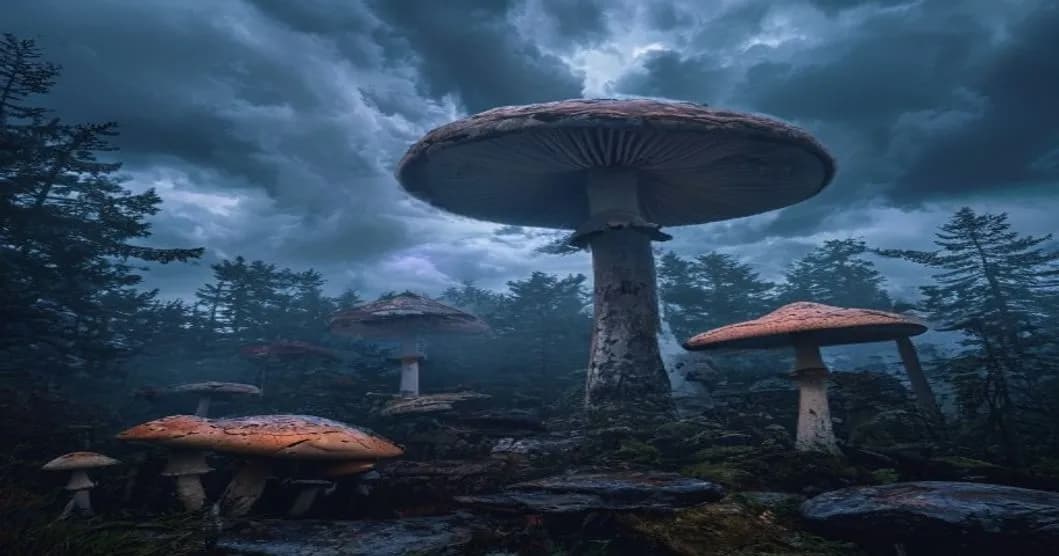
Mushrooms are often considered minor organisms, but their impact on the environment is significant. According to certain studies, mushrooms could be responsible for massive CO2 emissions, contributing thus to climate stability.
The Role of Mushrooms in Ecosystems
Mushrooms are decomposers that play a crucial role in breaking down organic matter. They help recycle nutrients and maintain soil fertility. But their impact goes far beyond just breaking down organic material. Mushrooms are also capable of forming symbiotic associations with plants, allowing them to exchange nutrients and information.
These symbiotic associations are particularly important in forest ecosystems, where mushrooms help trees absorb nutrients from the soil. Mushrooms are also capable of producing enzymes that help break down organic matter, which allows plants to better absorb nutrients.
Indeed, mushrooms use a process called enzymatic degradation to break down organic matter. This degradation is facilitated by the production of specific enzymes, such as proteases and lipases, which help break chemical bonds between molecules. This allows mushrooms to release the nutrients stored in organic matter, which is essential for plant growth and development.