
climat
Antarctica: How Extreme Weather Conditions Complicate Research, but Revolutionary Technology Provides Solutions
Antarctica, with its freezing temperatures and fierce winds, poses unprecedented challenges to researchers. Discover how new technologies allow us to overcome these obstacles to better understand our planet.
WE
Rédaction Weather IA
mardi 2 juin 2026 à 19:17Updated mercredi 10 juin 2026 à 23:026 min
The Challenges of Research in Antarctica
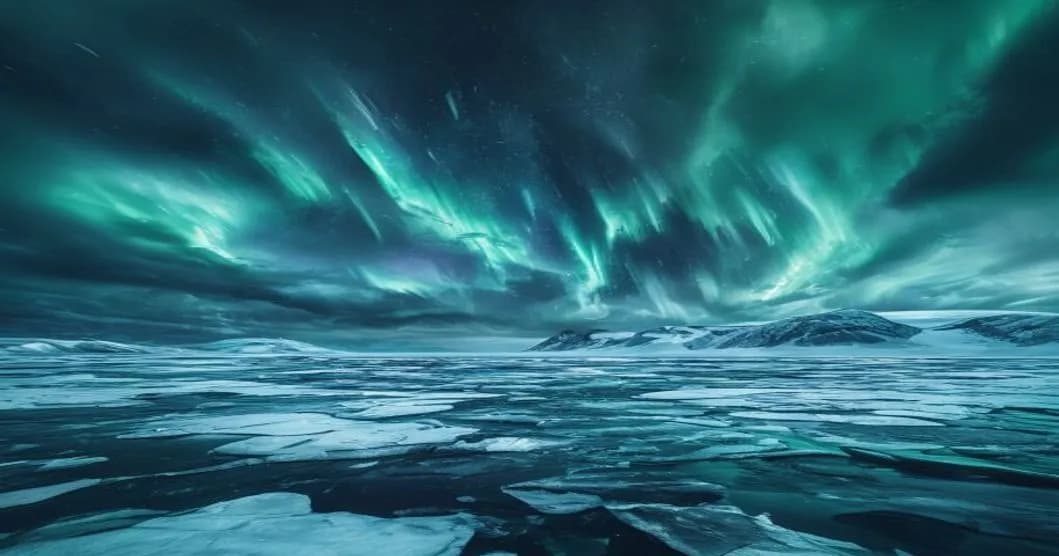
Traditional meteorological stations often face interference from snowstorms and accumulated ice, limiting the data collected. These disruptions directly impact our ability to model global climate, as Antarctica plays a crucial role in the Earth's climate system. Researchers must not only endure these harsh conditions but also find solutions to maintain their scientific activities despite the challenges. Antarctica is also faced with rare and intense meteorological phenomena, such as ice tornadoes and white snowstorms. These events, which can last for several days, make working conditions extremely difficult and dangerous for researchers. For example, in 2025, an especially violent snowstorm forced the team at the Amundsen scientific station to evacuate部分 of their staff to safer bases.Revolutionary Technology to Overcome Challenges
In response to these obstacles, significant technological advancements have been made. Robust weather sensors and AI algorithms now enable the collection of more reliable and comprehensive data, even in the most unfavorable conditions. These innovations not only improve data quality but also open new avenues for studying climate and its evolution. Modern weather sensors are designed to withstand extreme temperatures and snow pressure. They use advanced insulating materials and built-in heating systems to function correctly in the harshest conditions. Additionally, AI algorithms developed to analyze Antarctic meteorological data are capable of filtering noisy information and predicting weather changes with great precision. These technologies have already enabled the collection of critical data on climate change, including accelerated glacier melt and rising sea levels. For instance, in 2026, a research team using these sensors was able to document accelerated glacier melt in the region of west Antarctica, providing better understanding of the effects of global warming in this area.Impact on Climate Science
These advancements have a significant impact on our understanding of global climate. By collecting more precise data on Antarctica, scientists can better model the effects of global warming and predict future weather changes. This information is crucial for informing climate policies and protecting threatened ecosystems. Antarctica is a key indicator of global climate change. Data collected in this region helps scientists understand how global warming affects oceans, ecosystems, and polar regions. For example, recent studies have shown that Antarctic glacier melt contributes to rising sea levels, threatening coastal populations worldwide.Regional Impacts and Practical Advice
The impacts of extreme weather conditions in Antarctica are not limited to the region itself. Climate changes linked to Antarctica can have global repercussions, including effects on ocean currents and distant regional climates. For instance, polar ice melt can influence the thermohaline system, a oceanic circulation mechanism that plays a crucial role in the climate of the Northern Hemisphere. For researchers working in Antarctica, it is essential to adapt to local conditions and follow strict safety protocols. This includes wearing insulated clothing, snow equipment, and emergency rescue training. Teams must also be aware of the risks posed by snowstorms and snowslides.Comparison with Past Weather Episodes
Extreme weather conditions in Antarctica have not always been as intense. Historical records show an increase in the frequency of snowstorms and glacier melt over the past decades, which aligns with global warming predictions. For example, in 2024, a particularly violent snowstorm hit the Weddell Sea region, causing major disruptions to scientific operations. This event served as a reminder of the need to improve technologies used in Antarctica to cope with increasingly unfavorable weather conditions.The Future of Research in Antarctica
As weather conditions become more extreme, technology plays a central role in continuing research. Projects like GraphCast and Pangu-Weather demonstrate how AI can revolutionize meteorology in Antarctica, offering exciting new perspectives for the coming years. GraphCast, for instance, is an AI system designed to predict Antarctic weather with high precision. It uses historical data and climate models to anticipate weather changes, which is particularly useful for researchers planning field operations. Pangu-Weather, on the other hand, focuses on real-time meteorological data analysis. This system uses advanced sensors and machine learning algorithms to provide up-to-date information on weather conditions, enabling researchers to make informed decisions based on risks. These projects show that the future of research in Antarctica is closely tied to technological innovation. By developing more robust and intelligent systems, scientists can continue to explore this hostile continent and contribute to our understanding of global climate.Conclusion
Antarctica, with its extreme weather conditions, poses major challenges to researchers. However, thanks to innovative technological advancements, it is possible to overcome these obstacles and continue exploring this crucial continent for understanding global climate. In summary, the future of research in Antarctica seems promising, with technologies like GraphCast and Pangu-Weather opening new avenues for studying this hostile and captivating world.Was this article helpful?
Commentaires
Connectez-vous pour laisser un commentaire